


PVC Steel Wire Hose Factory | Durable, Food-Grade, OEM
Inside a pvc steel wire hose factory: trends, specs, and what buyers really ask
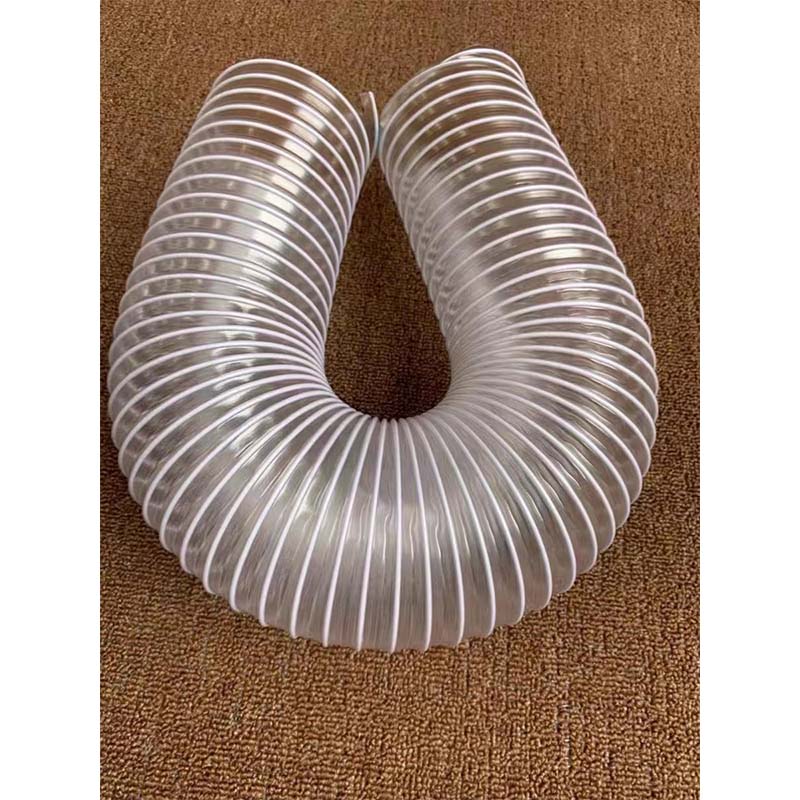
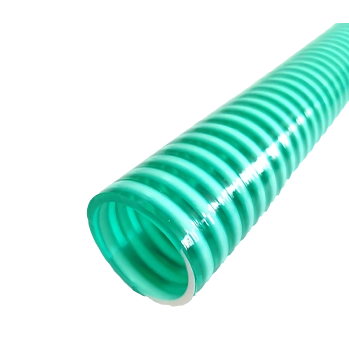
If you’ve ever toured a pvc steel wire hose factory, you’ll know the soundtrack: wire coilers whirring, extrusion lines humming, QC gauges clicking away. It’s oddly reassuring. Today I’m looking at the PVC STEEL WIRE DUCT HOSE made in Origin: Hongda Business 1602, Yuhua District, Shijiazhuang City, Hebei Province—where, to be honest, the blend of traditional extrusion know‑how and tight testing has gotten sharper year by year.
What’s trending in duct/vent hoses
Three themes keep popping up: lighter coils for easier installs, cleaner formulations that pass RoHS/REACH checks, and steadier negative-pressure ratings for industrial vacuum lines. Interestingly, many customers say they’re willing to pay a bit more for better bend memory—the hose that springs back instead of kinking at elbows. In fact, that’s where steel-wire reinforcement earns its keep.
Construction and process flow (how it’s actually made)
Structure: three layers—inner soft PVC, middle steel-wire helix PVC-coated, outer soft PVC. Wall thickness ≈0.2–2.0 mm depending on size. Process steps:
- Materials: flexible PVC compound, galvanized spring steel wire (or stainless on request), plasticizers within REACH guidance.
- Methods: hot extrusion of inner layer → in-line wire helix embedding → outer layer fusion wrap → cooling bath → length cut.
- Testing: hydrostatic/burst per ISO 1402; vacuum resistance per ISO 7233; electrical resistance per ISO 8033 (anti-static options); dimensional tolerances per ISO 1307.
- Typical service life: around 3–5 years indoors; outdoors depends on UV exposure (UV-stabilized options extend this).
Where it’s used (and what operators report)
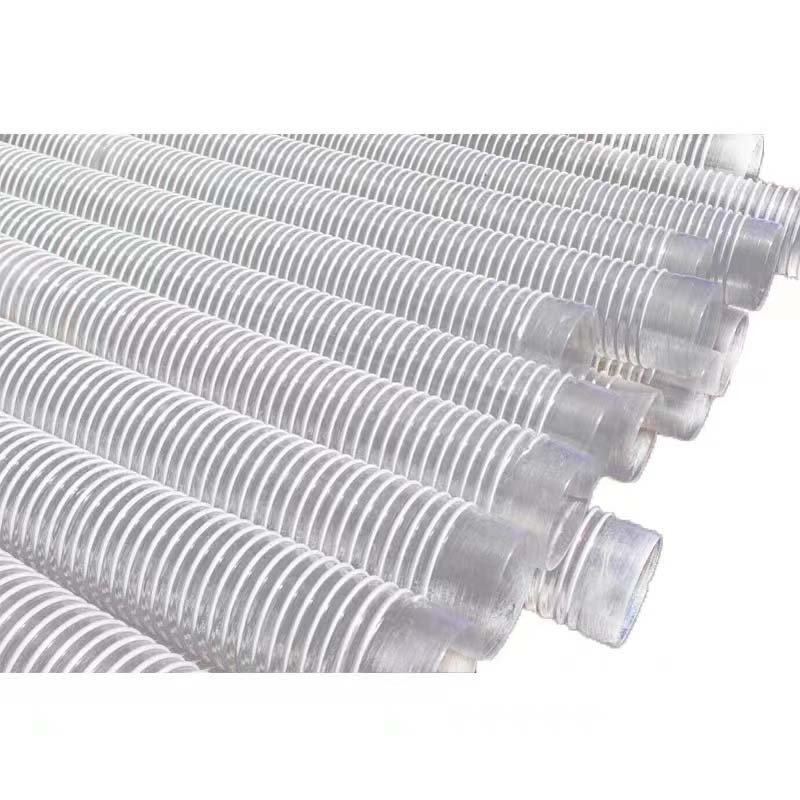
Ventilation lines, fume and dust extraction, industrial vacuum cleaning, pellet/particle conveying, light slurry transfer, woodworking shops, and agricultural aeration. Operators tell me the sweet spot is balancing flexibility with negative-pressure holding; surprisingly, a slightly thicker wall can outperform a larger wire in real workshops.
Key specs at a glance
| Parameter | Typical Value (≈, real-world use may vary) |
|---|---|
| Size Range (ID) | 25–300 mm |
| Wall Thickness | 0.2–2.0 mm |
| Temp Range | -5°C to +70°C (short peaks +80°C) |
| Vacuum Rating | Up to ≈0.8 bar negative (size-dependent) |
| Coil Length | 10–30 m |
| Compliance | ISO 9001 QMS; RoHS/REACH materials upon request |
Customization (what buyers usually tweak)
- Wire: galvanized vs. stainless; helix pitch adjustments for bend radius.
- Compounds: food-contact PVC (where applicable), anti-static additive, UV-stabilized outer layer.
- Colors/branding: clear, gray, or custom tints; logo print on meter marks.
- Fittings: cuffs, clamps, camlocks; pre-assembled lengths save install time.
Vendor landscape (quick comparison)
| Vendor Type | Pros | Considerations |
|---|---|---|
| Factory-direct (e.g., pvc steel wire hose factory) | Better control of specs, custom runs, consistent batches | MOQs can apply; lead time for custom colors |
| Regional distributor | Local stock; fast delivery; mixed brands | Specs may vary by lot; less customization |
| Overseas OEM | Volume pricing; white-label options | Sampling/approval cycles; logistics risk |
Case notes from the floor
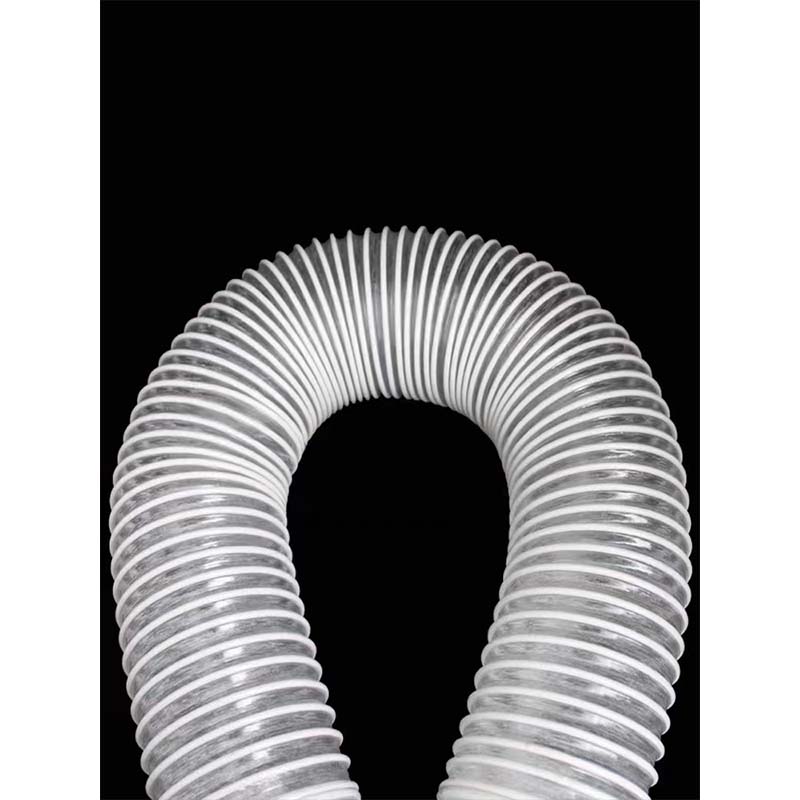
A woodworking plant swapped fabric duct for pvc steel wire hose factory product on a cyclone line. Result: fewer kinks at tight elbows, static dissipation improved with an anti-static grade, and—according to their maintenance lead—“we stopped babysitting the hose.” Another client in plastic pellet conveying chose thicker walls (≈1.6 mm) and saw vacuum collapse issues disappear.
Quality, certificates, and what to request
Ask for ISO 9001 certificate, material RoHS/REACH statements, and test sheets citing ISO 1402, ISO 7233, and ISO 8033. For food-adjacent air movement, confirm the specific PVC grade. I guess it sounds fussy, but paperwork saves headaches later—especially on audits.
Citations:
[1] ISO 1307: Rubber and plastics hoses — Dimensions, tolerances and designation.
[2] ISO 1402: Rubber and plastics hoses — Hydrostatic testing.
[3] ISO 7233: Rubber and plastics hoses — Determination of resistance to vacuum.
[4] ISO 8033: Rubber and plastics hoses — Electrical resistance/conductivity.
[5] EU RoHS Directive 2011/65/EU; REACH (EC) No 1907/2006, ECHA guidance.
-
High Strength Industrial Clear Braided PVC Hose Pipe GuideNewsApr.16,2026
-
Industrial Reinforced Braided PVC Hose for Fluid Transfer GuideNewsApr.09,2026
-
Comprehensive Guide to Braided PVC Tubing Applications and BenefitsNewsApr.07,2026
-
Comprehensive Guide to Braided Clear Vinyl Tubing Applications and BenefitsNewsApr.04,2026
-
Comprehensive Guide to PVC Braided Hose Applications and SelectionNewsMar.31,2026
-
Comprehensive Guide to Selecting the Best Double Welding Hose for Your NeedsNewsMar.28,2026
 Afrikaans
 Albanian
 Arabic
 Azerbaijani
 Belarusian
 Bengali
 Bulgarian
 Czech
Czech
 Danish
 Dutch
Dutch
 Finnish
 French
 German
 Greek
Greek
 Hebrew
 Hindi
Hindi
 Hungarian
 Indonesian
 Irish
Irish
 Italian
 Japanese
 Kazakh
 Korean
 Kyrgyz
 Lao
Lao
 Latin
Latin
 Lithuanian
 Luxembourgish
 Malay
Malay
 Mongolian
 Myanmar
 Nepali
 Norwegian
 Persian
 Polish
 Portuguese
 Russian
 Serbian
 Slovak
 Spanish
 Swedish
 Tagalog
 Thai
Thai
 Turkish
 Ukrainian
 Uighur
 Uzbek
Uzbek
 Vietnamese
 Welsh
Welsh
 English