


Water Suction Hose | Heavy-Duty, Flexible, Kink-Resistant
Field Notes on a Water Suction Hose: what matters when the pit is flooding
I’ve stood ankle-deep beside rental pumps as crews wrestled couplings at dawn. When the water’s coming, gear either performs or it doesn’t—no in-betweens. The Water Suction Hose we’re talking about here is built for the rough stuff: heavy construction, irrigation pits, mining sumps, emergency dewatering. From Hongda Business 1602, Yuhua District, Shijiazhuang City, Hebei Province, this line leans into durability rather than frills.
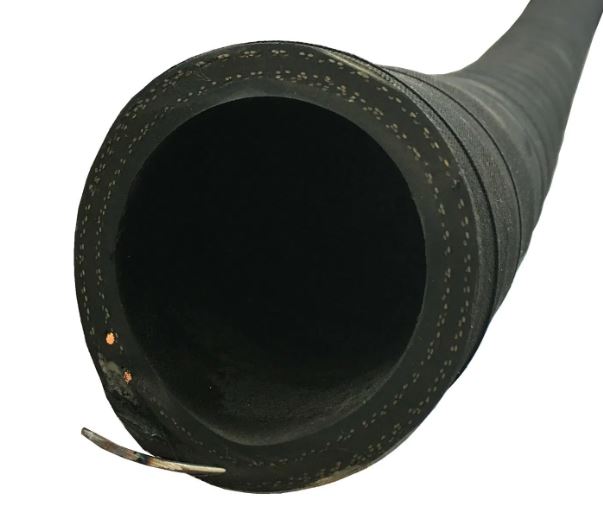
Industry snapshot, honestly
Two trends jump out lately: first, more weather volatility (surprisingly fast stormwater spikes), and second, a pivot back from bargain PVC to reinforced rubber for suction lines. Contractors tell me PVC still wins on lightness, but rubber’s cut resistance and vacuum stability save the day when trenches collapse or gravel chews covers. Also, safety factors are under fresh scrutiny on critical setups; a standard 3:1 hose isn’t the right tool for permanent or surge-prone duty.
Core build and process flow
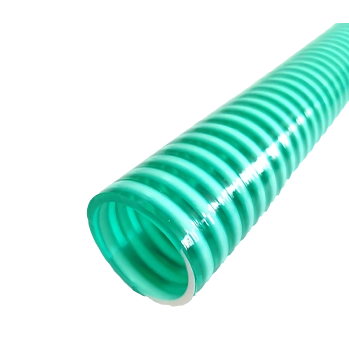
Water Suction Hose construction typically uses an NR/SBR black tube for abrasion and water compatibility, textile plies, and a steel wire helix for full vacuum stability. The cover is SBR/EPDM-blend for weathering and ozone resistance. Manufacturing steps: calendaring the tube, spiral-wrapping reinforcement, inserting the helix, cover extrusion, then autoclave vulcanization. Every batch sees hydrostatic and vacuum tests, dimensional checks, and adhesion testing. Service life in real jobs? Around 3–5 years, depending on UV, flex cycles, and handling (dragging over rebar shortens any hose’s lifespan, to be honest).
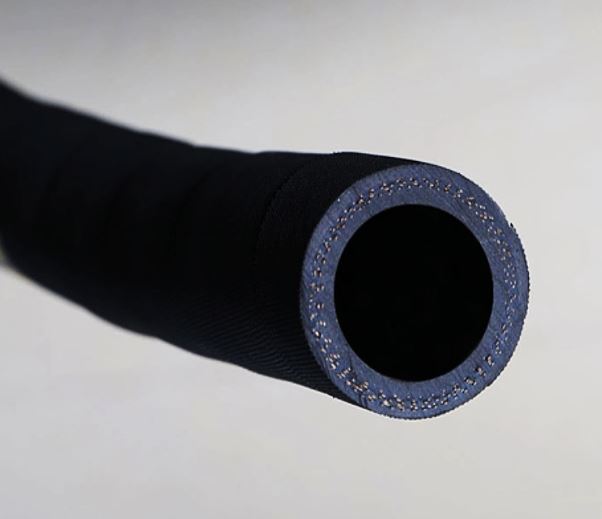
Typical product specs (real-world use may vary)
| Parameter | Spec (≈) |
|---|---|
| Inner diameters | 1.5"–8" (38–203 mm) |
| Working pressure | ≈ 10 bar / 150 psi |
| Burst (3:1 SF) | ≈ 30 bar / 450 psi |
| Vacuum rating | Full vacuum (≈ -0.9 bar) |
| Temp range | -30°C to +80°C (-22°F to +176°F) |
| Cover | SBR/EPDM, abrasion & weather resistant |
| Standards used | ISO 1307, ISO 1402, ASTM D380 |
Where it excels (and where it doesn’t)
Great for: site dewatering, flood response, sediment ponds, agricultural irrigation intake, pit mining sumps. Not designed for food-grade, high-volume long-distance pressurized transfer, continuous heating (like glycol), or permanently installed critical pumps with surge. For critical suction/discharge, a petroleum/chemical hose with higher safety factor is the sane call.
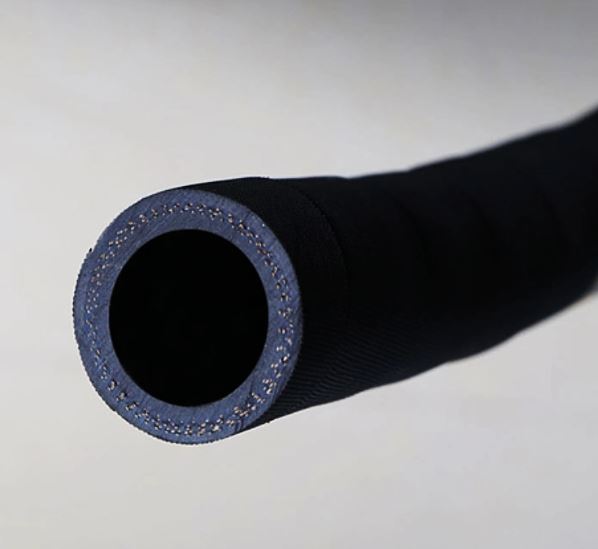
Vendor comparison (brief, but practical)
| Vendor | Build | Safety factor | Typical use | Notes |
|---|---|---|---|---|
| Kebing (Hebei) | Rubber tube + textile + steel helix | 3:1 (standard) | Rugged dewatering | Good cut/weather resistance |
| Generic import PVC | PVC spiral | ≈2.5–3:1 | Light-duty | Lighter, but scuffs/collapses easier |
| Premium chem hose | Rubber/compound, heavy helix | 4:1–6:1 | Critical duty | Costly, but safer under surge |
Customization and test data
Sizes 1.5"–8", lengths 10–60 m, with camlocks, Bauer, or flanged ends. Branding, color-stripe, and antistatic wire on request. Typical QA snapshot on a 4" Water Suction Hose: hydrostatic test at 10 bar for 10 min (ISO 1402), burst ≈ 31 bar (ASTM D380), vacuum collapse test passed at 85 kPa, adhesion > 2.5 kN/m, bend radius ≈ 200 mm (ISO 1307/4671). ISO 9001 factory system and material RoHS/REACH declarations available.
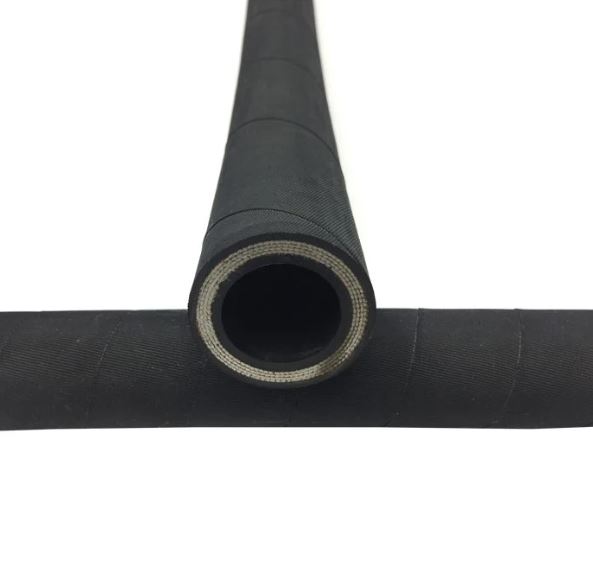
Quick case study
A quarry in a surprisingly windy valley swapped out collapsing 6" PVC suction for a 6" rubber Water Suction Hose with steel helix. Over three months, they logged zero collapse events, noted 25% fewer changeouts, and—this was their words—“less babying the line when trucks rolled by.” Not scientific, but it tracks with what many customers say.
Important limitations: this Water Suction Hose is not food-grade, not for long-distance high-pressure transfer, and not for continuous heat (glycol). For critical suction/discharge with surge or permanent installations, choose a petroleum or chemical hose with a higher safety factor.
Authoritative references
- ASTM D380 – Standard Test Methods for Rubber Hose.
- ISO 1402 – Rubber and plastics hoses and hose assemblies — Hydrostatic testing.
- ISO 1307 – Rubber and plastics hoses — Hose sizes, tolerances and minimum bend radii.
- ISO 4671 – Rubber and plastics hoses — Methods of measurement of dimensions.
-
High Strength Industrial Clear Braided PVC Hose Pipe GuideNewsApr.16,2026
-
Industrial Reinforced Braided PVC Hose for Fluid Transfer GuideNewsApr.09,2026
-
Comprehensive Guide to Braided PVC Tubing Applications and BenefitsNewsApr.07,2026
-
Comprehensive Guide to Braided Clear Vinyl Tubing Applications and BenefitsNewsApr.04,2026
-
Comprehensive Guide to PVC Braided Hose Applications and SelectionNewsMar.31,2026
-
Comprehensive Guide to Selecting the Best Double Welding Hose for Your NeedsNewsMar.28,2026
 Afrikaans
 Albanian
 Arabic
 Azerbaijani
 Belarusian
 Bengali
 Bulgarian
 Czech
Czech
 Danish
 Dutch
Dutch
 Finnish
 French
 German
 Greek
Greek
 Hebrew
 Hindi
Hindi
 Hungarian
 Indonesian
 Irish
Irish
 Italian
 Japanese
 Kazakh
 Korean
 Kyrgyz
 Lao
Lao
 Latin
Latin
 Lithuanian
 Luxembourgish
 Malay
Malay
 Mongolian
 Myanmar
 Nepali
 Norwegian
 Persian
 Polish
 Portuguese
 Russian
 Serbian
 Slovak
 Spanish
 Swedish
 Tagalog
 Thai
Thai
 Turkish
 Ukrainian
 Uighur
 Uzbek
Uzbek
 Vietnamese
 Welsh
Welsh
 English