0%

Table of Contents

You know, it's funny. Been running around construction sites all year, seeing what works and what doesn’t. Polyurethane tube, right? Seems simple enough. But honestly, the stuff’s changing fast. Everybody's talking about bio-based polyurethanes now. They say it’s greener, less reliant on oil... Haven’t seen enough of it on-site to really give a solid opinion yet, but the samples I’ve handled? They feel... different. A little softer, maybe? Not necessarily bad, just… different. It’s a long road from the lab to the real world, that's for sure.

And the thing about these tubes, don’t even get me started on the pressure ratings. Everyone wants higher and higher, pushing the limits. But it’s not just about the numbers on the spec sheet. It’s about how it behaves under sustained pressure, in actual conditions. I saw a whole batch fail last year, looked great on paper, but the fitting blew on a hydraulic line. Messy. Very messy.

It's all about the details, you know? You think a tube is a tube, but it isn't. Especially with polyurethane. It's not like metal, doesn't always give you a clear warning. You gotta be careful.
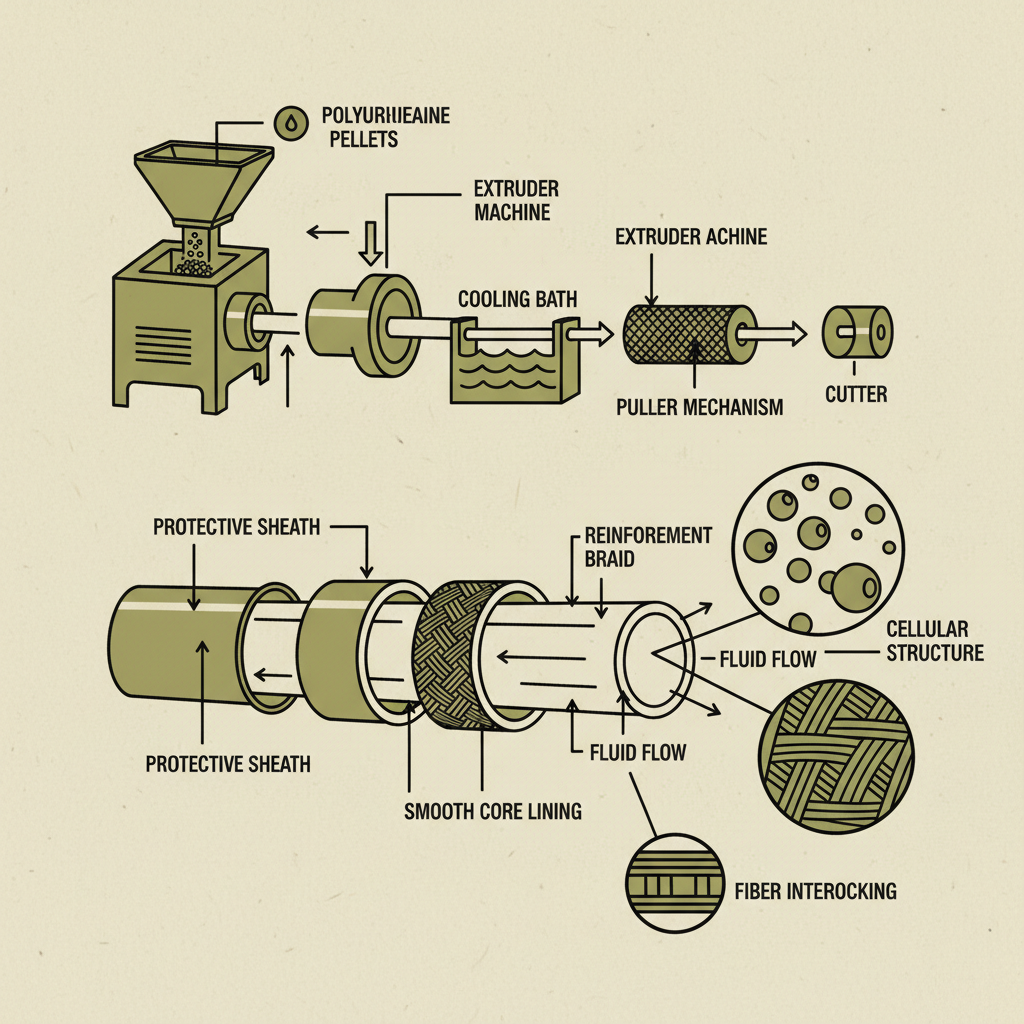

polyurethane tube manufacturer

The Ever-Changing Landscape of Polyurethane Tube Manufacturing

polyurethane tube manufacturer

To be honest, the push for sustainability is huge right now. And for good reason. But ‘sustainable’ is a loaded word, isn’t it? Lots of talk about recycled content, biodegradable options... I visited a polyurethane tube manufacturer in Ningbo last month that was really pushing their recycled TPU. Smelled… different. Not unpleasant, just… less chemical. They swear it performs just as well, but long-term durability? Jury’s still out.

Have you noticed how everyone wants smaller diameter tubes for miniaturization? Makes sense for some applications, but it introduces a whole new set of problems with flow rates and pressure drops. The manufacturers are scrambling to improve the inner surface finish to minimize friction, but it’s a constant balancing act. It’s a bit of a headache, truthfully.

Design Pitfalls: What Polyurethane Tube Manufacturers Don't Tell You

Strangely, a lot of designers don’t fully appreciate the impact of bending radius. Polyurethane, while flexible, has its limits. Too tight a bend, and you’ll get kinking, reduced flow, and ultimately, failure. And the manufacturers, they'll give you a number, a minimum bend radius, but they don’t always tell you it's affected by temperature and the specific grade of polyurethane. It's all in the fine print, you gotta read it.

Another thing: chemical compatibility. People assume polyurethane is universal. It’s not. Certain solvents, oils, and even some cleaning agents can cause it to swell, degrade, or become brittle. I encountered this at an automotive factory last time – they were using a solvent to clean the assembly line, and it was slowly eating away at the fuel lines. A real nightmare.

And don't even get me started on color coding. You think a nice bright orange tube will help prevent errors? Think again. UV exposure fades colors over time. Suddenly, your “high-pressure” line looks identical to your “low-pressure” line. It's a small detail, but it can cause big problems.

Materials and the "Feel" Test

Now, when you handle different types of polyurethane, you can tell a lot just by the feel. The basic polyester-based polyurethanes are pretty tough, good abrasion resistance. They have a slightly rubbery feel, a bit grippy. They smell... well, like polyurethane. Kind of sweet, kind of plasticky.

Then you’ve got the polyether-based ones. They’re more flexible, better resistance to hydrolysis (important if they're exposed to water), but they're generally not as abrasion resistant. They feel a little softer, a little more slippery. And the smell is… subtler.

And then there’s the TPU, thermoplastic polyurethane. That stuff’s different again. It’s more like a hard plastic, but still with some flexibility. You can mold it, extrude it… It feels smoother, more refined. They’re often used for more complex shapes and applications. You’ll be paying more, though.

Real-World Testing: Beyond the Lab

Lab testing is important, sure. Burst pressure, tensile strength, elongation… all that jazz. But it doesn't tell the whole story. I've seen tubes pass all the lab tests and still fail miserably on the job site.

We do our own testing, you know? We take samples and subject them to realistic conditions. We expose them to the chemicals they’ll actually encounter, cycle them through temperature extremes, and bend them repeatedly to simulate real-world use. We even bury them in dirt for a few weeks to see how they handle the elements. It's rough, but it gets results.

Polyurethane Tube Manufacturer Performance Metrics


How Polyurethane Tubes Are Actually Used

You know, engineers will design something, specify a tube for a particular application. But then the guys on the ground will find ways to use it for things you never imagined. I've seen them use it as makeshift cable protectors, as padding for delicate equipment, even as a temporary seal for leaky pipes. They’re resourceful, those guys.

It’s also important to remember that installation matters. A perfectly good tube can fail if it’s not installed correctly. Proper fitting selection, correct tubing cutter, no kinks or twists… it all makes a difference. I swear, half the failures I see are due to poor installation.

The Good, The Bad, and The Customizable

Okay, polyurethane tubes? They're flexible, durable, resistant to a lot of things... good all-around performers. But they aren’t perfect. They can be expensive, especially the higher-performance grades. They can be susceptible to UV degradation if they aren’t properly protected. And they can be a pain to work with if you’re not careful.

But the beauty of working with a good polyurethane tube manufacturer is that you can often get them to customize things. Need a specific color? No problem. Need a different durometer (hardness)? They can do that. Last month, that small boss in Shenzhen who makes smart home devices insisted on changing the interface to , and the result was a three-week delay because they had to tool up for a completely new fitting! Anyway, I think customization is key. It’s what separates the good suppliers from the rest.

Another thing about customization - wall thickness. A lot of folks don’t realize how much of a difference a slightly thicker wall can make. It adds cost, sure, but it can dramatically improve burst pressure and long-term durability. Worth considering.

A Shenzhen Story: The Debacle

Let me tell you about old Mr. Li in Shenzhen. Smart guy, makes these little smart home hubs. Last month, he decided he needed to switch the power connector to . Said it was more modern, more convenient. I tried to tell him, “Mr. Li, you’ve been using barrel connectors for years, they work perfectly well!” But he wouldn't listen.

The problem? He hadn’t accounted for the increased internal diameter required for the connector. He needed a custom polyurethane tube with a smaller outer diameter, but a larger inner diameter. The manufacturer had to re-tool their extrusion process, and it took three weeks to get the parts. Three weeks! He lost a bunch of orders, and he was not happy.

He finally got it sorted, and the hubs are selling well now. But he learned a valuable lesson: sometimes, sticking with what works is the best option.

A Simple Table Summarizing Polyurethane Tube Performance

Tube Material Abrasion Resistance (1-10) Chemical Resistance (1-10) Flexibility (1-10)
Polyester Polyurethane 8 6 7
Polyether Polyurethane 5 8 9
Thermoplastic Polyurethane (TPU) 7 7 6
Bio-Based Polyurethane 6 5 8
High-Pressure Polyurethane 9 7 5
Flame Retardant Polyurethane 7 6 6

FAQS

What is the typical lifespan of a polyurethane tube in a hydraulic system?

Lifespan really depends. Things like fluid type, pressure, temperature, and abrasion all play a role. Generally, you're looking at 2-5 years in a well-maintained system. But if the fluid is contaminated or the pressure is consistently high, it could be much shorter. I’ve seen them fail in six months in some harsh environments. Regular inspection is key, and replacing them proactively is always cheaper than dealing with a catastrophic failure.

Can polyurethane tubes be used with compressed air?

Yes, but with caution. Polyurethane is generally good with compressed air, but it can be susceptible to cracking over time if the air is excessively dry. Moisture helps keep it pliable. So, if you're using it in a dry climate, you might want to consider a different material or use an air line lubricator. And always check the manufacturer's specifications – not all polyurethane tubes are rated for compressed air.

What's the best way to cut a polyurethane tube cleanly?

Don’t even think about using a utility knife. You’ll just crush the tube and end up with a jagged edge. You need a proper tube cutter, the kind with a sharp, circular blade. It gives you a nice, clean, square cut. And remember to deburr the inside of the tube after cutting to remove any sharp edges that could restrict flow. A specialized deburring tool is best, but a small pick can work in a pinch.

How do I know if a polyurethane tube is compatible with a specific chemical?

Always, always check the chemical compatibility chart provided by the polyurethane tube manufacturer. They’ll list which chemicals the tube is resistant to and which ones it’s not. Don't rely on guesswork. And even if the chart says it’s “compatible,” it’s a good idea to test a small piece of the tube with the chemical before using it in a critical application.

Are there any common fitting issues I should be aware of?

Oh, plenty. Make sure the fitting is the correct size and type for the tube. Don't overtighten the fitting – you can crush the tube and cause leaks. And be careful with barbed fittings – they can damage the inside of the tube if you force it on too hard. A little bit of lubricant can help with installation, but make sure it’s compatible with the fluid you’re using.

What are the benefits of using a custom polyurethane tube?

Customization lets you optimize the tube for your specific application. Need a specific color for identification? Done. Need a different durometer for increased flexibility or abrasion resistance? No problem. A specialized manufacturer can tailor the tube to your exact requirements, which can improve performance and reliability. It costs a little more upfront, but it can save you money in the long run by reducing failures and downtime.

Conclusion

So, after all this rambling, what have we learned? Polyurethane tubing is a versatile material, but it's not a silver bullet. It requires careful consideration of application, materials, installation, and maintenance. The industry’s moving towards sustainability, customization is becoming more accessible, and testing needs to go beyond the lab.

Ultimately, whether this thing works or not, the worker will know the moment he tightens the screw. It's about feel, experience, and knowing what to look for. And a good relationship with a reliable polyurethane tube manufacturer never hurts. That’s it. I’m going to grab a coffee.

Ethan Blackwood

Ethan Blackwood

Ethan Blackwood serves as Kebing’s Quality Control Manager. He’s responsible for upholding our rigorous quality standards throughout the entire production process, from raw material sourcing to final product inspection. With a background in Materials Science and a decade of experience in quality assurance, Ethan ensures every hose meets or exceeds
Previous pu tube suppliers
INQUIRE
en_USEnglish