


Flexible Duct Hose with High Flow & Durability?
The hot-side workhorse: a flexible duct hose that doesn’t blink at 300°C
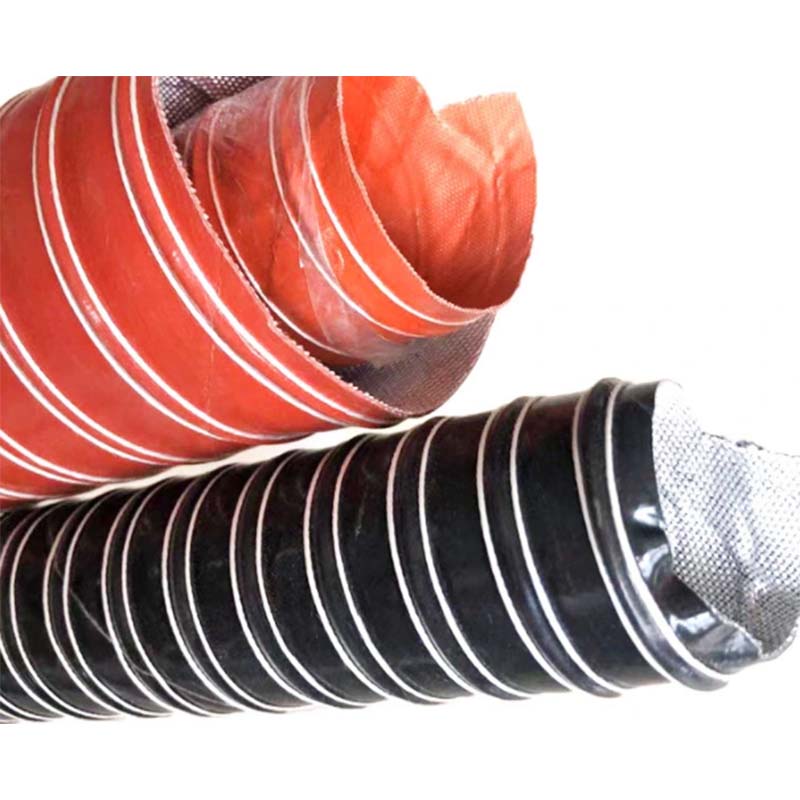
If you’ve ever stood beside a curing oven or a laser fume line, you know the ducting either keeps up or cooks out. I’ve been touring plants where a single failure means lost batches, so choosing a flexible duct hose isn’t a checkbox—it’s survival. The SILICONE COATED GLASS FIBER DUCT from Kebing (origin: Hongda Business 1602, Yuhua District, Shijiazhuang City, Hebei Province) has been popping up in conversations lately, and for good reason: dual-layer silicone-coated glass fiber with a spiral spring steel wire, rated to ≈300°C. On paper it sounds tough. In the field, it’s surprisingly forgiving.
What’s driving the demand
Energy-efficient retrofits, hotter processes (battery drying lines, powder coating, bakery tunnel ovens), and stricter fume capture are pushing plants toward high-temp flexible duct hose. Composite laminates—silicone on glass fiber—have become the sweet spot: light enough for maintenance techs, rugged enough for thermal cycling, and reasonably airtight for serious static pressure.
Construction and why it matters
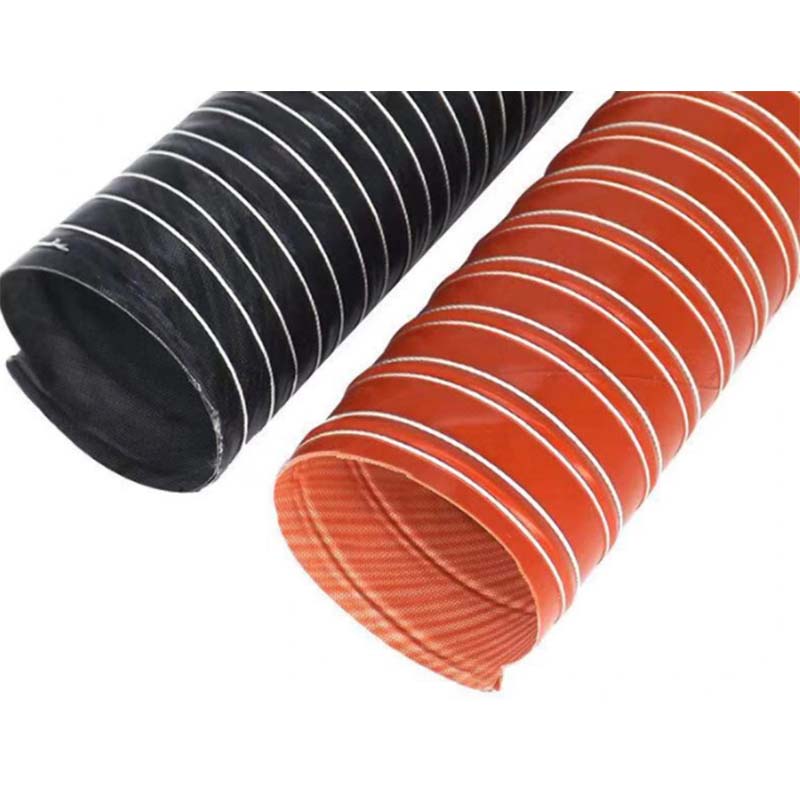
This model uses a dual-layer silicone-coated glass fabric plus glass-fiber cord reinforcement, wrapped around a helical spring steel wire. The steel holds shape under negative pressure, while silicone resists heat, ozone, and a fair bit of chemical mist. It’s not a miracle—drag a pallet fork across it and you’ll be buying a new length—but in ovens and fume lines, it’s a steady performer.
Key specs (real-world use may vary)
| Parameter | Typical value |
|---|---|
| Temperature range | -60°C to +300°C (short peaks to ≈320°C) |
| Diameters | Ø50–Ø500 mm (custom up to ≈Ø1000 mm) |
| Bend radius | ≈1 × hose diameter |
| Pressure / vacuum | +2500 Pa / -3000 Pa (at Ø150 mm; EN 13180 method) |
| Air velocity | up to ≈30 m/s |
| Length | Standard 5–10 m; cuffs or flanges optional |
Manufacturing and testing flow (short version)
Materials: silicone-coated glass fabric + glass fiber cord; spring steel helix. Methods: calendering and dual-layer lamination, helical wire forming, high-temp vulcanization, seam stitching, end-cuff forming. Tests include EN 13180 pressure/air-leak, ISO 188 heat aging (e.g., 168 h at 250°C; weight loss typically <2%), flex endurance akin to ISO 10380 cycles, and wire salt-spray per ISO 9227 (for anti-corrosion). Reported service life: around 5–10 years depending on heat cycles, abrasion, and chemical loading.
Where it’s used (and why)
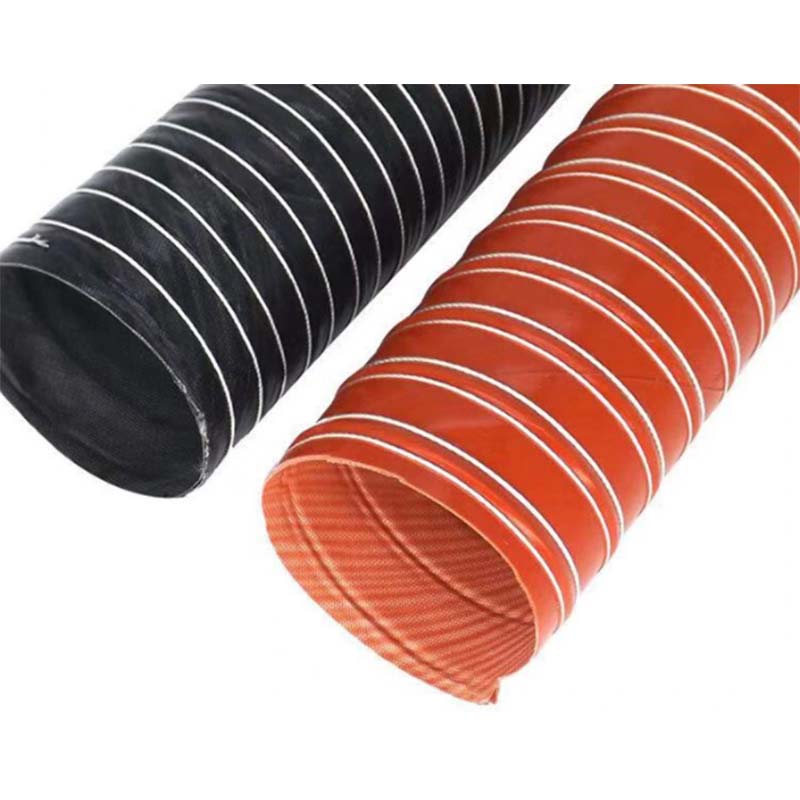
- Ovens and dryers (food, coatings, textiles) where a flexible duct hose must handle constant 200–280°C. - EV battery lines and composite curing—low outgassing helps. - Welding, laser and solder fume extraction—good bendability in tight bays. - Plastics extrusion cooling/venting and print shop hot-air handling.
Customers say it “just seats nicely” on round plenums, and maintenance likes the predictable bend radius. I guess the biggest perk is stability after a few heat cycles; some hoses slump, this one holds shape.
Vendor comparison (indicative)
| Vendor | Temp rating | Vacuum (Ø150) | Certs | Lead time | Notes |
|---|---|---|---|---|---|
| Kebing Silicone Glass Duct | to 300°C | ≈-3000 Pa | ISO 9001; RoHS/REACH | 10–20 days | Custom cuffs, diameters |
| Vendor A (EU) | to 260°C | ≈-2500 Pa | EN 13180 | 3–4 weeks | Lightweight focus |
| Vendor B (US) | to 315°C | ≈-2800 Pa | UL 94 data | 2–3 weeks | Premium price |
Customization
Options include antistatic wire, extra plies for abrasion, silicone color coding, FDA-style inner for incidental food-area air, and quick-clamp cuffs. For tight cabinets, ask for shorter pitch to reduce “accordion” drag.
Quick case notes
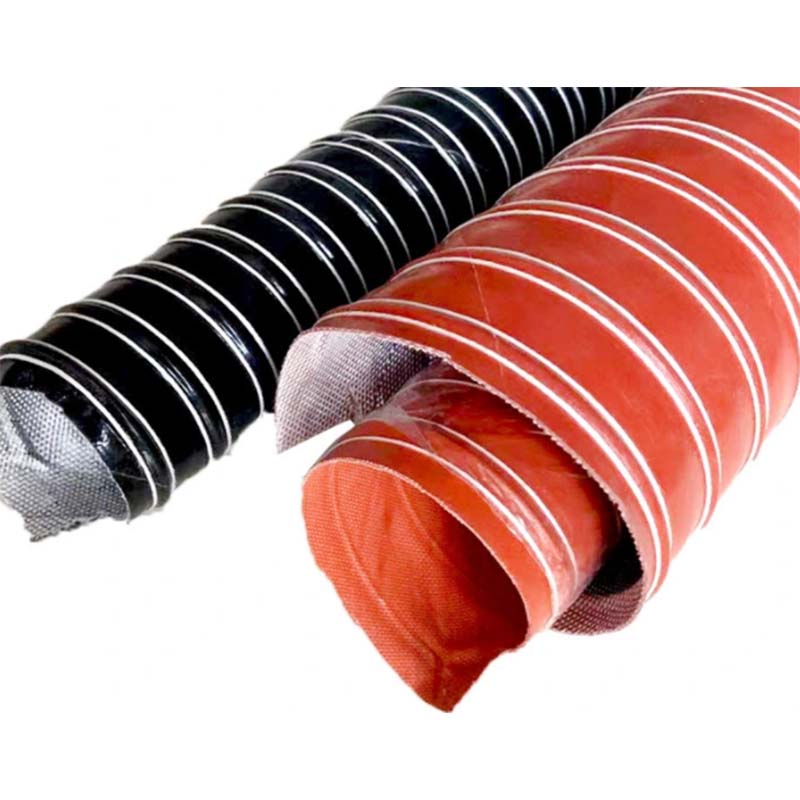
- Bakery retrofit: swapped aging aluminum flex for this flexible duct hose on a 240°C tunnel oven. Leak rate dropped by ≈18% (plant readings), and cleaning got faster because the hose held roundness. - EV battery line: high-temp exhaust with light solvent vapor. After 6 months, thermal-cycling checks showed no delamination; maintenance logged “zero clamp reseats.” Not bad.
Final thought: if you need high-heat flexibility without overengineering, this hits that “just right” spot.
Citations
- EN 13180: Ventilation for buildings—Ductwork—Flexible ducts.
- ISO 188: Rubber, vulcanized or thermoplastic—Accelerated aging and heat resistance tests.
- ISO 10380: Pipework—Metallic hoses—Pressure, flexing and vibration tests (method reference for flex endurance).
- ISO 9227: Corrosion tests in artificial atmospheres—Salt spray tests.
- UL 94: Tests for flammability of plastic materials (reference for silicone fire behavior).
- RoHS/REACH compliance guidance—EU chemicals and restricted substances frameworks.
-
High Strength Industrial Clear Braided PVC Hose Pipe GuideNewsApr.16,2026
-
Industrial Reinforced Braided PVC Hose for Fluid Transfer GuideNewsApr.09,2026
-
Comprehensive Guide to Braided PVC Tubing Applications and BenefitsNewsApr.07,2026
-
Comprehensive Guide to Braided Clear Vinyl Tubing Applications and BenefitsNewsApr.04,2026
-
Comprehensive Guide to PVC Braided Hose Applications and SelectionNewsMar.31,2026
-
Comprehensive Guide to Selecting the Best Double Welding Hose for Your NeedsNewsMar.28,2026
 Afrikaans
 Albanian
 Arabic
 Azerbaijani
 Belarusian
 Bengali
 Bulgarian
 Czech
Czech
 Danish
 Dutch
Dutch
 Finnish
 French
 German
 Greek
Greek
 Hebrew
 Hindi
Hindi
 Hungarian
 Indonesian
 Irish
Irish
 Italian
 Japanese
 Kazakh
 Korean
 Kyrgyz
 Lao
Lao
 Latin
Latin
 Lithuanian
 Luxembourgish
 Malay
Malay
 Mongolian
 Myanmar
 Nepali
 Norwegian
 Persian
 Polish
 Portuguese
 Russian
 Serbian
 Slovak
 Spanish
 Swedish
 Tagalog
 Thai
Thai
 Turkish
 Ukrainian
 Uighur
 Uzbek
Uzbek
 Vietnamese
 Welsh
Welsh
 English