


Durable Polyurethane Pneumatic Tubing for Industrial Efficiency
Polyurethane Pneumatic Tubing: Why It Still Rules the Industrial Scene
Having spent over a decade knee-deep in industrial equipment setups, I can tell you the tubing that carries air in a system is often underrated. Take polyurethane pneumatic tubing for example — it’s this unsung hero that quietly keeps machines humming without glitches.
Oddly enough, despite the steady march of new synthetic materials, polyurethane (PU) tubing remains wildly popular. Frankly, it’s a mix of its flexibility, durability, and resistance that makes it a real winner. In real terms, when you’re working on pneumatic lines for manufacturing or automation, you want tubing that bends without kinking and won’t deteriorate after a few months of service.
What’s fascinating is the way this tubing adapts to different environments. Polyurethane can handle sharp bends – something PVC struggles with – not to mention it’s abrasion resistant. I’ve seen setups where machines churn dust and debris all day, and the tubing barely shows wear after a year. Many engineers I know swear by PU tubing for these reasons.
A Quick Look at Polyurethane Pneumatic Tubing Specs
| Feature | Specification |
|---|---|
| Material | Polyurethane (Thermoplastic Elastomer) |
| Temperature Range | -40°C to +80°C (-40°F to +176°F) |
| Operating Pressure | Up to 15 bar (220 psi), depending on diameter |
| Bend Radius | 5 x outer diameter (flexible for tight spaces) |
| Abrasion Resistance | High |
| Chemical Resistance | Good against oils and greases, moderate against solvents |
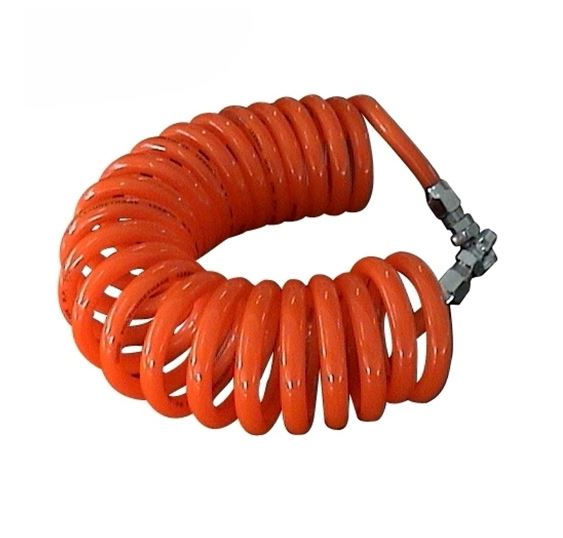
| Colors Available | Clear, blue, orange, green (custom colors available) |
One story I like sharing is from a factory I visited last year — they were switching out their old PVC pneumatic tubing because it kept cracking under pressure. Switching to PU tubing made a huge difference. Production downtime dropped almost immediately because the new tubing just doesn’t fail as often. It’s those real-world wins that really stick with me.
Comparing the Leading Suppliers: What Sets Them Apart?
| Supplier | Material Quality | Pressure Ratings | Product Range | Customization Options | Typical Industries Served |
|---|---|---|---|---|---|
| Kebing Hose | Premium thermoplastic polyurethane, UV stabilized | Up to 15 bar (220 psi) | Wide (multiple diameters & colors) | Custom colors, lengths, fittings | Industrial automation, packaging, automotive |
| Supplier B | Standard TPU grades | Up to 12 bar | Moderate size range | Limited customization | Furniture, food processing |
| Supplier C | Niche specialty formulations | Up to 10 bar | Narrow range, focused on medical | Highly specialized customization | Medical, biotech |
Obviously, no two suppliers are exactly alike. I noticed Kebing Hose stands out for really balancing quality with engineering flexibility — which in the pneumatic world, frankly, is pretty crucial. Their tubing manages to be rugged and flexible, which means shorter installation times and fewer call-backs.
Customization is another thing that I find makes a significant difference on-site. For instance, being able to get exact lengths or unique color coding can simplify maintenance a lot. Sometimes these “small” conveniences end up saving hours or even days in a large-scale setup.
Overall, it feels like polyurethane pneumatic tubing will keep its spot as the go-to choice for many industries. Its unique blend of mechanical properties and adaptability keeps engineers coming back — I suppose that’s telling enough.
Bottom line? If you want reliability in your pneumatic lines, polyurethane pneumatic tubing is hard to beat.
References:
- Industry Pneumatic Tubing Standards – ISO 2398 (2017)
- Kebing Hose Product Brochure, 2024 Edition
- “Practical Guide to Flexible Tubing in Automation” – Industrial Engineer Journal, 2023
-
High Strength Industrial Clear Braided PVC Hose Pipe GuideNewsApr.16,2026
-
Industrial Reinforced Braided PVC Hose for Fluid Transfer GuideNewsApr.09,2026
-
Comprehensive Guide to Braided PVC Tubing Applications and BenefitsNewsApr.07,2026
-
Comprehensive Guide to Braided Clear Vinyl Tubing Applications and BenefitsNewsApr.04,2026
-
Comprehensive Guide to PVC Braided Hose Applications and SelectionNewsMar.31,2026
-
Comprehensive Guide to Selecting the Best Double Welding Hose for Your NeedsNewsMar.28,2026
 Afrikaans
 Albanian
 Arabic
 Azerbaijani
 Belarusian
 Bengali
 Bulgarian
 Czech
Czech
 Danish
 Dutch
Dutch
 Finnish
 French
 German
 Greek
Greek
 Hebrew
 Hindi
Hindi
 Hungarian
 Indonesian
 Irish
Irish
 Italian
 Japanese
 Kazakh
 Korean
 Kyrgyz
 Lao
Lao
 Latin
Latin
 Lithuanian
 Luxembourgish
 Malay
Malay
 Mongolian
 Myanmar
 Nepali
 Norwegian
 Persian
 Polish
 Portuguese
 Russian
 Serbian
 Slovak
 Spanish
 Swedish
 Tagalog
 Thai
Thai
 Turkish
 Ukrainian
 Uighur
 Uzbek
Uzbek
 Vietnamese
 Welsh
Welsh
 English