


Durable Polyurethane Air Compressor Hose | Industrial Grade PU Hoses
Why Polyurethane Air Compressor Hoses Are Still the Go-To Choice
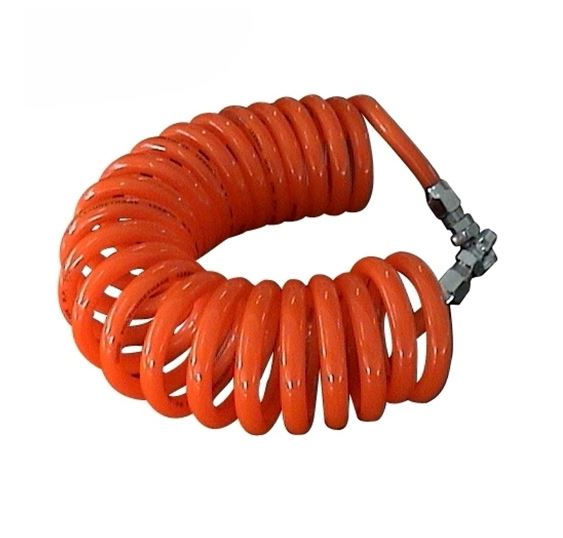
Having spent over a decade in the industrial equipment sector (you know, the kind of work boots-and-all experience), I've noticed one thing for sure: not all air compressor hoses are created equal. Polyurethane air compressor hose remains an industry favorite, and for good reason.
Frankly, it’s the balance they strike between flexibility, durability, and chemical resistance that engineers love. Plus, if you’ve ever tangled with a rubber hose under pressure, you get why lightweight material is important. The polyurethane (PU) hoses feel almost like they’re designed with “user comfort” in mind — which is not always the case with industrial gear.
Let me give you some insider details on why these hoses stick around in workshops and factories worldwide.
Material and Design – What Makes PU Hoses Special?
PU hoses are crafted using a polyurethane outer layer that’s abrasion-resistant and highly flexible. Unlike PVC or rubber, polyurethane resists kinking and cracking — even in harsh weather conditions or when dragged over rough surfaces. Don’t underestimate how often hoses get rolled up, stepped on, or thrown in a corner. These hoses just seem to bounce back.
Inside, you generally find a smooth bore core, often reinforced with synthetic fibers or helix wires. This helps them manage high pressure (some rated up to 300 PSI or more) while keeping airflow steady. In fact, I recall a plant manager mentioning how their switch to PU hoses cut down replacement times—less downtime means better productivity.
Typical Product Specifications
| Feature | Specification |
|---|---|
| Material | Polyurethane Outer, Nylon or Polyester Reinforcement |
| Pressure Rating | 150 - 300 PSI (varies by model) |
| Temperature Range | -40°C to +70°C (-40°F to +158°F) |
| Bend Radius | As low as 4x hose diameter |
| Length Options | Customizable, typically 10m, 20m, 30m reels |
| Weight | About 0.5 kg/m |
Vendor Comparison: Choosing the Right Supplier Matters
Oddly enough, even though the core technology doesn’t vary much, different vendors have subtle but crucial differences in quality, delivery, and customization. Here’s a quick comparison based on my experience and industry feedback:
| Vendor | Product Variety | Customization | Lead Time | Price Range | Notable Strength |
|---|---|---|---|---|---|
| Kebing Hose | Wide (PU, PVC, Hybrid) | High - Length, fittings, colors | 2-3 weeks | $$ | Quality control, durability |
| Brand X | Limited | Low | 1 week | $ | Budget-friendly |
| Brand Y | Moderate | Medium | 3-4 weeks | $$$ | Premium materials |
Real Talk: How PU Hoses Change the Game
I once worked with a client in automotive assembly who’d been fighting constant downtime with their old rubber hoses. They switched to polyurethane hoses across the line, mostly from Kebing Hose, and what surprised me was not just the lifespan increase, but how workers started appreciating the lighter and more flexible hoses. Imagine that — a hose that actually makes a difference on the floor level.
In real terms, these hoses reduce fatigue and are less likely to tangle or snag on equipment. That kind of usability improvement translates into fewer accidents and smoother workflow. I suppose that’s why many engineers still prefer them despite emerging alternatives.
And, of course, there’s always a tradeoff with price but honestly, durability and fewer replacements tend to balance that out. Also, if you need custom lengths or fitting options? Vendors like Kebing Hose can tailor those pretty swiftly.
All in all, if you’re evaluating air compressor hoses for any industrial use, consider giving polyurethane hoses a solid look. They’re the classic workhorses that just keep proving their worth.
Sometimes, the old favorites are the best for a reason.
Want to check out some reliable options? Visit Kebing Hose for details.
References:
1. “Engineering Guide to Hose Materials,” Industrial Equipment Journal, 2022.
2. Kebing Hose Product Catalog, 2023.
3. Interview with factory floor manager, Automotive Assembly, 2021.
-
High Strength Industrial Clear Braided PVC Hose Pipe GuideNewsApr.16,2026
-
Industrial Reinforced Braided PVC Hose for Fluid Transfer GuideNewsApr.09,2026
-
Comprehensive Guide to Braided PVC Tubing Applications and BenefitsNewsApr.07,2026
-
Comprehensive Guide to Braided Clear Vinyl Tubing Applications and BenefitsNewsApr.04,2026
-
Comprehensive Guide to PVC Braided Hose Applications and SelectionNewsMar.31,2026
-
Comprehensive Guide to Selecting the Best Double Welding Hose for Your NeedsNewsMar.28,2026
 Afrikaans
 Albanian
 Arabic
 Azerbaijani
 Belarusian
 Bengali
 Bulgarian
 Czech
Czech
 Danish
 Dutch
Dutch
 Finnish
 French
 German
 Greek
Greek
 Hebrew
 Hindi
Hindi
 Hungarian
 Indonesian
 Irish
Irish
 Italian
 Japanese
 Kazakh
 Korean
 Kyrgyz
 Lao
Lao
 Latin
Latin
 Lithuanian
 Luxembourgish
 Malay
Malay
 Mongolian
 Myanmar
 Nepali
 Norwegian
 Persian
 Polish
 Portuguese
 Russian
 Serbian
 Slovak
 Spanish
 Swedish
 Tagalog
 Thai
Thai
 Turkish
 Ukrainian
 Uighur
 Uzbek
Uzbek
 Vietnamese
 Welsh
Welsh
 English