


Twin Welding Hose 8mm: Durable & Safe Welding Hose Solutions for Global Industry
Twin Welding Hose 8mm: What It Is and Why It Matters
When you hear twin welding hose 8mm, it's easy to think, "just another industrial part." But honestly, this simple tool plays a quietly vital role in industries around the world — from manufacturing heavy machinery in Europe to crucial repairs in remote African mining sites. Understanding this hose type opens doors to safer, more efficient welding setups, which, frankly, helps everything from infrastructure development to humanitarian aid projects.
The compact design coupled with reliable material makes the 8mm twin welding hose a go-to choice for both professionals and service providers globally.
Global Outlook: Why Does the Twin Welding Hose 8mm Matter?
To put things into perspective, the global industrial gas market alone is expected to reach over $100 billion by the mid-2020s. Welding, as a fundamental process across construction, automotive, and shipbuilding industries, depends heavily on dependable equipment like the twin welding hose. According to ISO and market analysis reports, up to 60% of industrial downtime can be linked to equipment failure or safety hazards. That’s where quality hoses step in — preventing leaks, gas losses, and costly halts in production.
Moreover, with rapid urbanization and infrastructural expansions in Asia, Africa, and South America, the demand for efficient welding tools — including the 8mm twin welding hose — is rising. Yet challenges remain, especially in ensuring safety and high performance in diverse environments where standards and supplier reliability vary widely.
What Exactly Is a Twin Welding Hose 8mm?
Put simply, a twin welding hose 8mm is a dual-tube hose system designed to deliver two gases simultaneously — commonly oxygen and acetylene or other fuel gases — necessary for oxy-fuel welding and cutting processes. The “8mm” refers to the inner diameter of each hose tube, influencing flow rate and flexibility. Combining both hoses into one assembly reduces tangling and enhances maneuverability on the worksite.
While simple in design, this tool is indispensable in modern manufacturing lines, repair workshops, and even emergency response units requiring quick, safe welding operations. It echoes advances in industry safety and performance standards championed by entities like the ISO and American Welding Society (AWS).
Key Features and Core Components
1. Durability
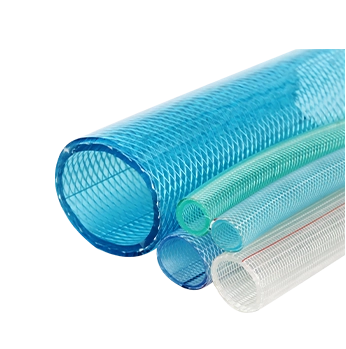
The materials usually comprise high-quality synthetic rubber or thermoplastic elastomers, built to withstand chemical corrosion, heat, and physical abrasion. Many manufacturers incorporate a braided textile or steel wire layer for extra strength — ensuring the hose can handle pressures up to 20 MPa depending on specs.
2. Flexibility & Length Options
Flexibility is crucial on dynamic job sites. The 8mm size strikes a balance: small enough for ease of movement but large enough for proper gas flow. Lengths often vary from 3 to 15 meters, adjustable per task requirements.
3. Safety Standards Compliance
Because these hoses manage highly combustible gases, they are rigorously tested and certified under global standards such as EN ISO 3821 and ISO 3821. Color-coded outer sheathing often differentiates the gas types — red for acetylene, green for oxygen, for example — reducing mishaps.
4. Ease of Maintenance
Resistance to kinks and cracks helps prolong hose life. Many hoses have replaceable ends and are designed for visually easy inspection, a feature many seasoned welders appreciate during regular safety audits.
Product Specification Table
| Specification | Details |
|---|---|
| Inner Diameter | 8 mm per hose |
| Material | Synthetic rubber with textile braid reinforcement |
| Max Pressure | Up to 20 MPa (varies by model) |
| Temperature Range | -20°C to 65°C |
| Standard Compliance | EN ISO 3821, ISO 3821 |
Global Applications & Use Cases
From sprawling construction sites in the Middle East to fast-moving automotive workshops in Germany, the twin welding hose 8mm finds its place. Oddly enough, it’s also critical in emergency humanitarian operations: NGOs use mobile welding units with twin hoses to rebuild hospital equipment or water pipes swiftly after disasters.
- Industrial manufacturing: High-volume welding in automotive and shipbuilding.
- Field service & repair: Maintenance crews in oil rigs or mining operations depend on robust hoses.
- Training institutions: Welding schools worldwide adopt standard-size hoses for safety and learner familiarity.
- Disaster relief efforts: Quick-setup welding for reconstructing critical infrastructure.
Regions like Southeast Asia and Sub-Saharan Africa have seen an uptake thanks to their expanding manufacturing base and growing infrastructure investments.
Vendor Comparison
| Vendor | Material Quality | Certifications | Price Range | Warranty |
|---|---|---|---|---|
| Kebing Hose Co. | High-grade synthetic rubber & textile braid | EN ISO 3821, SGS tested | Mid-level | 2 years |
| Global Weld Supplies | Premium thermoplastic material | ISO 3821 | High-end | 3 years |
| EconoHoses Ltd. | Standard synthetic rubber | Partial ISO 3821 compliant | Budget-friendly | 1 year |
Advantages & Long-Term Value
The reliability of a twin welding hose 8mm dramatically cuts downtime and enhances safety — two things that can’t really be compromised, right? Beyond cost savings, it ensures cleaner joints, reducing rework. There's also an emotional peace of mind for welders, who feel safer working with trusted gear that meets tough standards.
And from a sustainability lens, durable hoses mean less frequent replacements — fewer resources consumed, less waste created. Some recent models have begun incorporating eco-friendly compounds, which could become the norm as industrial environmental policies tighten.
Looking Ahead: Future Trends & Innovations
Innovation is stirring in hose design. Expect more hybrid material blends boosting heat resistance and flexibility. Digital monitoring systems — sensors that detect pressure leaks or hose wear — are increasingly integrated, aiding predictive maintenance.
Also, with the push toward green energy welding alternatives, hoses may need adaptions to safely handle new fuels or gases. Regulatory shifts could harmonize global standards further, easing cross-border equipment deployment.
Challenges & Solutions
Despite its advantages, challenges linger. For one, counterfeit or subpar hoses flood markets in some regions — a real safety threat. Also, adapting hoses to extreme environments (arctic cold or desert heat) requires material innovation.
Solutions? Savvy procurement from certified vendors, regular inspection, and ongoing investment in R&D. Educational programs stressing hose maintenance help too.
FAQ: Frequently Asked Questions About Twin Welding Hose 8mm
- Q: How do I know if an 8mm twin welding hose suits my welding setup?
A: The 8mm size works well for standard oxy-fuel processes. Check your equipment’s pressure and flow requirements — your vendor can usually guide you. Most workshops prefer 8mm for balancing flow capacity with flexibility. - Q: What maintenance does a twin welding hose require?
A: Regular visual inspections for cracks, leaks, or wear are key. Avoid kinks and store hoses away from sharp edges and direct sunlight. Replace parts as recommended by the manufacturer, typically every 3–5 years. - Q: Can I use the same hose for different gases?
A: No; it’s crucial to use hoses designed and colored for specific gases to avoid contamination or dangerous mix-ups. Twin hoses keep oxygen and fuel lines separate and marked accordingly. - Q: Are twin welding hoses 8mm compatible with automatic cutting machines?
A: Often, yes. However, check flow rates and pressure ratings to ensure compatibility. Automated systems sometimes require specialized hoses for optimum performance. - Q: Where can I buy reliable twin welding hose 8mm?
A: Trusted suppliers like Kebing Hose specialize in certified hoses that meet international standards.
Conclusion: Why Invest in a Twin Welding Hose 8mm?
The twin welding hose 8mm might look modest, but its role in safe, efficient industrial operations and humanitarian efforts worldwide is significant. Its safety, flexibility, and durability make it an indispensable tool. Choosing quality means better performance, fewer risks, and long-term cost savings — a true win-win.
If you want to explore quality options or learn more, visit our website and see how the right hose can power your work safely.
Mini takeaway: Don’t underestimate the impact of a quality twin welding hose in your welding operations — it’s one part that keeps many moving smoothly and safely.
References
-
High Strength Industrial Clear Braided PVC Hose Pipe GuideNewsApr.16,2026
-
Industrial Reinforced Braided PVC Hose for Fluid Transfer GuideNewsApr.09,2026
-
Comprehensive Guide to Braided PVC Tubing Applications and BenefitsNewsApr.07,2026
-
Comprehensive Guide to Braided Clear Vinyl Tubing Applications and BenefitsNewsApr.04,2026
-
Comprehensive Guide to PVC Braided Hose Applications and SelectionNewsMar.31,2026
-
Comprehensive Guide to Selecting the Best Double Welding Hose for Your NeedsNewsMar.28,2026
 Afrikaans
 Albanian
 Arabic
 Azerbaijani
 Belarusian
 Bengali
 Bulgarian
 Czech
Czech
 Danish
 Dutch
Dutch
 Finnish
 French
 German
 Greek
Greek
 Hebrew
 Hindi
Hindi
 Hungarian
 Indonesian
 Irish
Irish
 Italian
 Japanese
 Kazakh
 Korean
 Kyrgyz
 Lao
Lao
 Latin
Latin
 Lithuanian
 Luxembourgish
 Malay
Malay
 Mongolian
 Myanmar
 Nepali
 Norwegian
 Persian
 Polish
 Portuguese
 Russian
 Serbian
 Slovak
 Spanish
 Swedish
 Tagalog
 Thai
Thai
 Turkish
 Ukrainian
 Uighur
 Uzbek
Uzbek
 Vietnamese
 Welsh
Welsh
 English