


The Power of Flexibility: The Industrial Innovation Password of Flexible Hose Vacuum
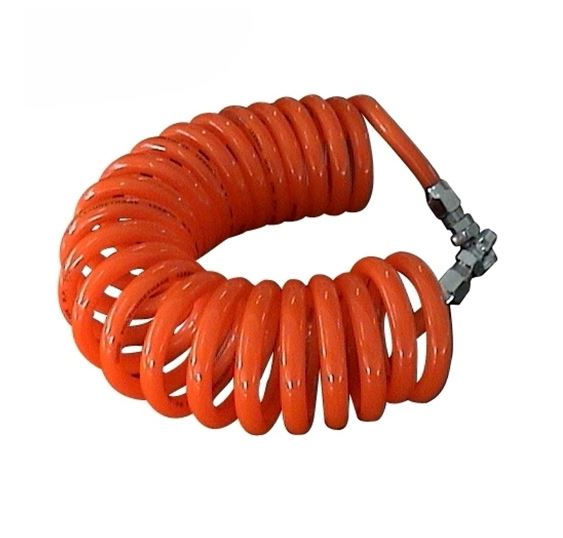
In modern industrial cleaning, material handling, and vacuum systems, Flexible Hose Vacuum is like a flexible "industrial blood vessel", providing reliable solutions for material transfer under complex working conditions with its characteristics of bendability, wear resistance, and strong adaptability. Its unique performance advantages and wide applications are reshaping the efficiency and mode of industrial operations.
The excellent performance of Flexible Hose Vacuum comes from precise material selection and structural design
The outer layer is usually made of high-strength and wear-resistant polyurethane or rubber material, which endows the hose with excellent tear resistance and aging resistance. Even under rough pipe friction or sharp material impact, it can remain intact; The middle layer is embedded with spiral steel wire or fiber weaving layer to enhance the compressive strength and flexibility of the hose, so that the vacuum pump hose can withstand negative pressure suction and bend freely without collapsing; The inner layer is made of smooth food grade or anti-static materials to ensure clean and unobstructed material transportation, avoiding safety hazards caused by static electricity accumulation. The synergistic effect of the three-layer composite structure creates an efficient and stable transmission channel.
In practical industrial scenarios, Flexible Hose Vacuum demonstrates irreplaceable adaptability
In the field of construction and decoration, HVAC vacuum hoses can flexibly shuttle through narrow spaces, efficiently collect dust and debris, and ensure the cleanliness of construction sites; In the food processing industry, hoses that meet hygiene standards can safely transport flour and granular ingredients to prevent cross contamination; In chemical and pharmaceutical companies, corrosion-resistant hoses are responsible for transferring corrosive liquids or powders to ensure production safety; In the automobile manufacturing workshop, anti-static hoses effectively avoid the risk of static electricity caused by oil, gas, and particle adsorption, improving production safety.
The continuous advancement of technology drives the continuous iteration and upgrading of Flexible Hose Vacuum
The application of nano coating technology endows the surface of ducting hose with self-cleaning properties and reduces material residue; The embedding of intelligent sensing technology can monitor the pressure and wear of hoses in real time, and warn potential faults; The customized production mode of 3D printing can quickly design exclusive specifications according to different working conditions and achieve precise adaptation. These innovations not only enhance the performance of hoses, but also expand their application boundaries in extreme environments and special fields.
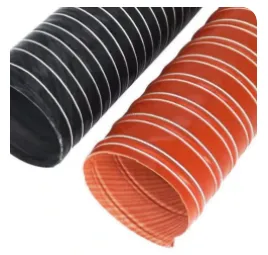
From precise design of material structures to flexible application in complex working conditions, from stable performance of basic functions to innovative integration of cutting-edge technologies, vacuum pipes shoulder the heavy responsibility of industrial transmission with their "flexible" body. It is not only a physical channel connecting equipment and materials, but also a key link to improve industrial efficiency and ensure safe production. With the deepening development of intelligent manufacturing and green industry, Flexible Hose Vacuum will continue to evolve, injecting lasting power into the efficient operation of various industries with a more intelligent, durable, and environmentally friendly attitude.
Flexible Hose Vacuum FAQs
Why is Flexible Hose Vacuum suitable for applications with limited space?
Due to the use of flexible materials such as PU or silicone for its pipelines, there is no need for complex brackets required to fix hard pipes, which can flexibly bypass obstacles and greatly save installation space. It is particularly suitable for laboratories, medical equipment, or small production lines.
Does the compact design of Flexible Hose Vacuum affect its vacuum performance?
can't. Flexible hoses typically have smooth inner walls and customizable diameters (commonly 6-50mm), achieving efficient suction while maintaining low flow resistance. Some high specification hoses can even withstand negative pressure of -0.95bar.
In which industries is Flexible Hose Vacuum most widely used?
Commonly used in semiconductor manufacturing (wafer handling), food packaging (vacuum sealing), dental equipment (suction device), etc., the core advantage is the ability to be embedded in narrow equipment layouts.
How to maintain Flexible Hose Vacuum?
Regularly inspect the hose for creases or wear to avoid long-term bending beyond the minimum bending radius (usually 5 times the diameter of the pipe); It is recommended to use PTFE material hoses for chemical corrosion environments.
What is the installation cost of Flexible Hose Vacuum compared to traditional metal pipes?
The installation cost is significantly reduced - there is no need for welding or flange connections, it can be assembled through quick couplings, and supports plug and play modifications, especially suitable for production lines that require frequent layout adjustments.
-
High Strength Industrial Clear Braided PVC Hose Pipe GuideNewsApr.16,2026
-
Industrial Reinforced Braided PVC Hose for Fluid Transfer GuideNewsApr.09,2026
-
Comprehensive Guide to Braided PVC Tubing Applications and BenefitsNewsApr.07,2026
-
Comprehensive Guide to Braided Clear Vinyl Tubing Applications and BenefitsNewsApr.04,2026
-
Comprehensive Guide to PVC Braided Hose Applications and SelectionNewsMar.31,2026
-
Comprehensive Guide to Selecting the Best Double Welding Hose for Your NeedsNewsMar.28,2026
 Afrikaans
 Albanian
 Arabic
 Azerbaijani
 Belarusian
 Bengali
 Bulgarian
 Czech
Czech
 Danish
 Dutch
Dutch
 Finnish
 French
 German
 Greek
Greek
 Hebrew
 Hindi
Hindi
 Hungarian
 Indonesian
 Irish
Irish
 Italian
 Japanese
 Kazakh
 Korean
 Kyrgyz
 Lao
Lao
 Latin
Latin
 Lithuanian
 Luxembourgish
 Malay
Malay
 Mongolian
 Myanmar
 Nepali
 Norwegian
 Persian
 Polish
 Portuguese
 Russian
 Serbian
 Slovak
 Spanish
 Swedish
 Tagalog
 Thai
Thai
 Turkish
 Ukrainian
 Uighur
 Uzbek
Uzbek
 Vietnamese
 Welsh
Welsh
 English