


Reliable Aluminum Foil Dryer Vent Hose for Efficient Venting Solutions
Why the Aluminum Foil Dryer Vent Hose Still Holds Its Ground
Having spent a good part of my industrial career around HVAC setups and venting systems, I can say the aluminum foil dryer vent hose is one of those quietly dependable components that doesn’t get enough attention. Oddly enough, despite all the advances in venting materials and design, this humble hose is still a favorite in many setups.
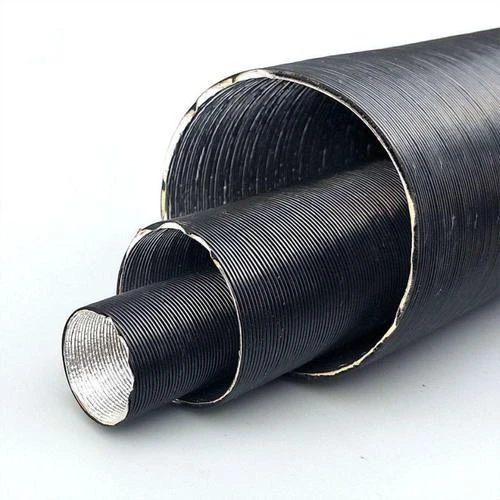
What makes it stick around? Well, for starters, the aluminum foil construction gives it excellent heat resistance — pretty essential when you think of the constant hot air blasting through a dryer hose. It’s also lightweight and flexible, which in real terms means installation is less of a headache. I remember one install where the cramped basement forced us to snake the vent hose through tight corners; this kind of flexibility saved the day.
Material-wise, the foil is typically bonded to a polyester core or reinforced with wire helixes to keep the hose intact under compression or movement. It’s not just about bending it once or twice; it needs to handle a bit of wear and tear without kinking or collapsing. Many engineers I’ve worked with appreciate this durability — especially for residential and light commercial units.
Sure, you’ll find rigid metal vent pipes out there, but the aluminum foil hose balances performance and cost-effectiveness pretty well. Also, since it’s lightweight, it reduces strain on mounting brackets and connections.
Aluminum Foil Dryer Vent Hose – Typical Product Specs
| Parameter | Specification |
|---|---|
| Material | Aluminum foil with polyester film & wire helix reinforcement |
| Diameter | 4 inches (most common), other sizes available |
| Length | Typically 25 feet (custom lengths on request) |
| Temperature Range | Up to 250°F continuous, 300°F short-term |
| Flexibility | High, suitable for tight bends & confined spaces |
| Safety | Fire-resistant, lint-resistant with proper installation |
On the testing front, good manufacturers perform pressure tests and temperature cycling for quality assurance. It’s one thing to claim heat resistance on paper; it’s another for the hose to endure months of drying cycles without sagging or releasing fibers into the air stream.
Vendor Comparison: Aluminum Foil Dryer Vent Hose
| Feature | Kebing Hose | Competitor A | Competitor B |
|---|---|---|---|
| Material Quality | Premium grade aluminum, reinforced polyester film | Standard aluminum foil, single-layer | Aluminum foil with thin plastic liner |
| Max Temp (°F) | 250 (continuous) | 220 | 240 |
| Flexibility | Very high, easy to install even in tight spaces | Moderate, less flexible near bends | High, but less durable under repeated bending |
| Customization | Custom lengths and diameters on request | Fixed sizes only | Limited custom options |
| Price | Mid-range, good value for quality | Lower | Higher |
One small story I like to share — a longtime client of ours needed a quick retrofit on an old rental building’s laundry venting system. The existing plastic vent hose had degraded, causing frequent lint buildup and even a minor overheating scare. We supplied the aluminum foil dryer vent hose in custom lengths, and installation went smoothly. Months later, the tenant reported the dryer was running more efficiently and the maintenance calls dropped. It’s these kinds of practical outcomes that make this material worthwhile in my book.
At the end of the day, if you want an industrial-grade yet versatile option for dryer venting, the aluminum foil hose is a strong candidate. You might find it’s not flashy or cutting-edge tech, but it performs consistency and reliability that matter.
So, if you're shopping around, keep an eye on material specs and manufacturer testing — a little due diligence goes a long way when safety and durability are concerns.
That said, I’ve written this from years in the field, and while most claims here are backed by supplier datasheets and industry standards, specifics can vary by vendor and application. Always double-check for compliance with local codes.
In brief: the aluminum foil dryer vent hose remains a trusted, flexible, and practical solution in many industrial and residential drying setups.
References:
- ASHRAE Handbook – HVAC Applications, Chapter on Ventilation & Ductwork
- National Fire Protection Association (NFPA) guidelines for dryer exhaust ducts
- Manufacturer datasheets and product performance certifications
-
High Strength Industrial Clear Braided PVC Hose Pipe GuideNewsApr.16,2026
-
Industrial Reinforced Braided PVC Hose for Fluid Transfer GuideNewsApr.09,2026
-
Comprehensive Guide to Braided PVC Tubing Applications and BenefitsNewsApr.07,2026
-
Comprehensive Guide to Braided Clear Vinyl Tubing Applications and BenefitsNewsApr.04,2026
-
Comprehensive Guide to PVC Braided Hose Applications and SelectionNewsMar.31,2026
-
Comprehensive Guide to Selecting the Best Double Welding Hose for Your NeedsNewsMar.28,2026
 Afrikaans
 Albanian
 Arabic
 Azerbaijani
 Belarusian
 Bengali
 Bulgarian
 Czech
Czech
 Danish
 Dutch
Dutch
 Finnish
 French
 German
 Greek
Greek
 Hebrew
 Hindi
Hindi
 Hungarian
 Indonesian
 Irish
Irish
 Italian
 Japanese
 Kazakh
 Korean
 Kyrgyz
 Lao
Lao
 Latin
Latin
 Lithuanian
 Luxembourgish
 Malay
Malay
 Mongolian
 Myanmar
 Nepali
 Norwegian
 Persian
 Polish
 Portuguese
 Russian
 Serbian
 Slovak
 Spanish
 Swedish
 Tagalog
 Thai
Thai
 Turkish
 Ukrainian
 Uighur
 Uzbek
Uzbek
 Vietnamese
 Welsh
Welsh
 English