


PVC Hose Price Insights from Industry Experts – Quality & Cost Explained
Understanding PVC hose price: A Veteran’s Take
Having spent close to two decades navigating the ins and outs of industrial equipment supply, I’ve come to realize that pricing for items like PVC hoses is not just a number on a tag—it’s the sum of quality, materials, market demand, and frankly, sometimes quirks of supply chain magic. Oddly enough, what you pay for PVC hoses today can reflect more than just the raw materials’ cost; it’s often a mirror of innovations in manufacturing and testing standards that many don’t notice at first glance.
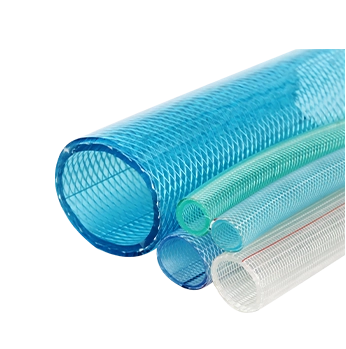
Let me take you behind the scenes a bit. PVC hoses, which stand for polyvinyl chloride hoses, are everywhere—from agriculture and construction to chemical transport and food processing. Their affordability paired with versatility usually makes them the go-to option. But prices can vary widely depending on thickness, reinforcement layers, abrasion resistance, and customizations. I can’t stress enough how different manufacturers approach these specs, and that affects the price more than you might think.
For example, a basic PVC hose might be fine for light garden watering, but if you’re transporting solvents or working with high-pressure systems in an industrial setting, your hose needs to meet stricter standards, which pushes costs up a bit. It feels like a balancing act — engineers want reliability, buyers want cost-efficiency, and suppliers are caught somewhere in between trying to deliver both.
| Feature | Specification | Notes |
|---|---|---|
| Material | Flexible PVC with polyester reinforcement | Balances flexibility and strength |
| Operating Pressure | Up to 10 bar (145 psi) | Suitable for medium-pressure tasks |
| Temperature Range | -10°C to 65°C (14°F to 149°F) | Covers most industrial environments |
| Inner Diameter | 10 mm to 150 mm | Versatile sizing options |
| Color | Transparent, Blue, Black, Custom | Color may affect price slightly |
Among the suppliers I’ve encountered, there’s a noticeable differentiation in pricing strategies. While commodity PVC hoses hover at lower price points, brands betting on higher-quality raw materials, enhanced abrasion resistance, or certifications tend to quote more—often justifiably so. An interesting tidbit: some vendors include slightly different polyester mesh layers inside their hoses, which can change how well the hose holds up under pressure and abrasion, and yep, that trickles down to the asking price.
| Vendor | Price per Meter (USD) | Reinforcement | Certifications | Customization |
|---|---|---|---|---|
| Vendor A (Mass Market) | $1.50 | Single polyester braid | ISO 9001 | Basic colors only |
| Vendor B (Specialized) | $2.80 | Double polyester braid + nylon mesh | ISO 9001, FDA | Custom colors & branding |
| Vendor C (Premium) | $3.50 | Triple braid reinforcement | ISO 9001, FDA, RoHS | Full custom specs |
In real terms, if you’re budgeting for PVC hoses, consider both upfront cost and lifespan. I’ve seen customers switch from seemingly cheaper options only to replace hoses earlier due to damage or failure, which ends up elevating total costs. One client from a chemical plant I worked with switched to a more robust hose supplier after repeated failures of their standard PVC hose—and you’d be surprised how much less downtime is worth.
Another nugget I often share: prices fluctuate with PVC resin costs, which depend on oil prices and global supply chain factors. If you notice spikes, don’t panic. Usually, prices stabilize, and most suppliers lock in bulk contracts helping to level the playing field somewhat.
So yes, the question of PVC hose price isn’t black and white. It’s a mixture of specs, supplier reliability, certifications, and your own operational priorities. If you’re looking for dependable, tested PVC hoses, lean towards suppliers that openly share detailed specs and testing results—nothing beats peace of mind in the field.
In my years, I’ve found that investing in quality upfront usually pays off — like so many things in industrial equipment. As cliché as that sounds, it’s the truth. And honestly, it feels like a better way to work.
At the end of the day, price is just part of the story.
References:
- Polyvinyl Chloride (PVC) Hose Industry Reports, 2023
- ISO 9001 and FDA Certification Guidelines for Hoses
- Interview notes with industrial engineers, 2022
-
High Strength Industrial Clear Braided PVC Hose Pipe GuideNewsApr.16,2026
-
Industrial Reinforced Braided PVC Hose for Fluid Transfer GuideNewsApr.09,2026
-
Comprehensive Guide to Braided PVC Tubing Applications and BenefitsNewsApr.07,2026
-
Comprehensive Guide to Braided Clear Vinyl Tubing Applications and BenefitsNewsApr.04,2026
-
Comprehensive Guide to PVC Braided Hose Applications and SelectionNewsMar.31,2026
-
Comprehensive Guide to Selecting the Best Double Welding Hose for Your NeedsNewsMar.28,2026
 Afrikaans
 Albanian
 Arabic
 Azerbaijani
 Belarusian
 Bengali
 Bulgarian
 Czech
Czech
 Danish
 Dutch
Dutch
 Finnish
 French
 German
 Greek
Greek
 Hebrew
 Hindi
Hindi
 Hungarian
 Indonesian
 Irish
Irish
 Italian
 Japanese
 Kazakh
 Korean
 Kyrgyz
 Lao
Lao
 Latin
Latin
 Lithuanian
 Luxembourgish
 Malay
Malay
 Mongolian
 Myanmar
 Nepali
 Norwegian
 Persian
 Polish
 Portuguese
 Russian
 Serbian
 Slovak
 Spanish
 Swedish
 Tagalog
 Thai
Thai
 Turkish
 Ukrainian
 Uighur
 Uzbek
Uzbek
 Vietnamese
 Welsh
Welsh
 English