


Flexible Aluminum Foil Duct - Durable & Versatile Industrial Solution
Why Flexible Aluminum Foil Ducts Remain Industry Staples
After spending more than a decade working close to the nuts and bolts of flexible aluminum foil duct applications in industrial settings, I have to say: these ducts still hold a special place in many engineers’ toolkits. Oddly enough, while newer materials and composites get their share of spotlight, aluminum foil ducts continue to prove their worth, particularly when it comes to ventilation, exhaust, and HVAC systems.
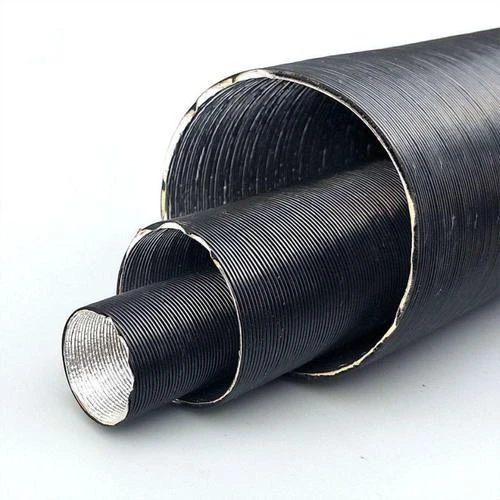
The appeal is partly down to the combination of flexibility and lightweight aluminum construction. This mix offers both ease of installation and resilience—something I noticed firsthand when we had an urgent retrofit job on an older factory line. The ducts needed to snake around awkward support beams and tight corners without compromising airflow. Aluminum foil ducts fit the bill perfectly, bending easily yet holding their shape well.
What many outside the industry might not realize is the layered design of these ducts. Usually, there’s an inner core of aluminum foil combined with reinforcing wire spiral, then a protective outer layer to fight against abrasion and heat. This structure strikes a balance between durability and flexibility so essential for industrial environments where conditions aren’t always gentle.
| Specification | Details |
|---|---|
| Material | Aluminum foil with steel wire reinforcement |
| Diameter Range | 50 mm to 500 mm (custom sizes available) |
| Temperature Range | -30°C to 250°C |
| Length | Standard 3m coils, customizable lengths |
| Outer Coating | Heat resistant PVC or PE |
| Compliance | ISO 9001 certified manufacturing |
One thing I’ve learned over the years – and frankly it took a few frustrating projects to understand this – is the importance of sourcing high-quality ducts. The market is pretty crowded, with vendors offering variations that sometimes differ subtly but with big impacts on lifespan or performance.
For instance, I once had a project where an “economy” model duct arrived with thinner aluminum foil and a less robust wire coil. It worked okay at first, but failed quicker under heat and bending, leading to costly downtime. Lesson learned: investing a bit more upfront can save headaches later.
| Vendor | Material Quality | Customization Options | Typical Lead Time | Price Range |
|---|---|---|---|---|
| Kebing Hose | Premium aluminum foil, reinforced spiral wire | Custom diameters & coatings | 2-3 weeks | Mid-range to premium |
| Generic Supplier A | Standard-grade aluminum | Limited sizing | 1 week | Budget |
| Industrial Ductworks | Heavy duty aluminum foil | Moderate options | 3-4 weeks | Higher-end |
Another point worth mentioning: flexible aluminum foil ducts are surprisingly eco-friendly compared to some plastic-based alternatives. Being mostly aluminum, many can be recycled, which in today’s sustainability-minded manufacturing feels like a plus. Plus, they respond well to custom orders—different lengths, diameters, coatings depending on the application. It’s that versatility that engineers and facility managers keep coming back to.
I recall a client in the food processing industry who needed a duct system resistant to mild acids and capable of frequent cleaning cycles. A tailored aluminum foil duct with a special PVC coating did the trick, lasting double the expected time compared to what they used previously. That’s the sort of practical advantage that doesn’t always make headlines but matters dearly in real terms.
If you’re looking for a robust, flexible, and proven choice in ducting, flexible aluminum foil duct remains a solid option worth considering. Just don’t skimp on quality — steel and aluminum in this combo really show their strengths when designed and manufactured right.
In the end, these ducts might seem simple, but their thoughtful design and material synergy make them quietly essential in industry’s many nooks and crannies.
- “Ducting for Industrial Applications,” Mechanical Engineers Journal, 2019
- Interview with HVAC specialists, 2022 Conference Notes
- Kebing Hose Product Catalog, 2024 Edition
-
High Strength Industrial Clear Braided PVC Hose Pipe GuideNewsApr.16,2026
-
Industrial Reinforced Braided PVC Hose for Fluid Transfer GuideNewsApr.09,2026
-
Comprehensive Guide to Braided PVC Tubing Applications and BenefitsNewsApr.07,2026
-
Comprehensive Guide to Braided Clear Vinyl Tubing Applications and BenefitsNewsApr.04,2026
-
Comprehensive Guide to PVC Braided Hose Applications and SelectionNewsMar.31,2026
-
Comprehensive Guide to Selecting the Best Double Welding Hose for Your NeedsNewsMar.28,2026
 Afrikaans
 Albanian
 Arabic
 Azerbaijani
 Belarusian
 Bengali
 Bulgarian
 Czech
Czech
 Danish
 Dutch
Dutch
 Finnish
 French
 German
 Greek
Greek
 Hebrew
 Hindi
Hindi
 Hungarian
 Indonesian
 Irish
Irish
 Italian
 Japanese
 Kazakh
 Korean
 Kyrgyz
 Lao
Lao
 Latin
Latin
 Lithuanian
 Luxembourgish
 Malay
Malay
 Mongolian
 Myanmar
 Nepali
 Norwegian
 Persian
 Polish
 Portuguese
 Russian
 Serbian
 Slovak
 Spanish
 Swedish
 Tagalog
 Thai
Thai
 Turkish
 Ukrainian
 Uighur
 Uzbek
Uzbek
 Vietnamese
 Welsh
Welsh
 English