


Expert Overview of PVC Hose Factory and Industrial Hose Manufacturing
Inside a PVC Hose Factory: What Makes Quality Industrial Hoses Tick?
Having spent more than a decade navigating the industrial equipment corridors and factory floors, I’ve come to appreciate the humble PVC hose factory as more than just a place where tubes get rolled out. It’s a blend of precision, durability, and frankly, a bit of art. Sure, PVC hoses look ordinary at first glance, but once you understand their design constraints and manufacturing nuances, you start to realize how pivotal they are in so many industrial processes.
Oddly enough, what drew me into PVC hoses initially was a random factory tour back in 2011. The engineer patiently explained the exact layering for abrasion resistance versus flexibility, and I remember thinking, “Ah, this is more than just plastic tubing.” These days, these hoses come with stringent material specs and testing procedures that keep them running under pressure in chemical plants, food processing sites, and even car washes.
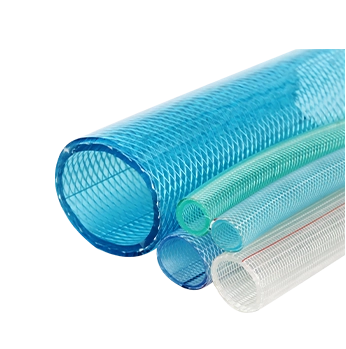
What’s fascinating is how materials science shapes the hose’s performance. PVC, or polyvinyl chloride, provides excellent chemical resistance and flexibility. But manufacturers often add reinforcements like polyester yarn or spiral steel wire to balance durability with bend radius — that kind of thing really makes or breaks a hose for specialized industrial tasks. Many engineers I’ve spoken with emphasize the importance of matching hose specs exactly to the application, lest you risk costly downtime or safety hazards.
| Property | Value | Notes |
|---|---|---|
| Material | Flexible PVC (Polyvinyl Chloride) | Resists chemicals and UV exposure |
| Reinforcement | Polyester yarn or spiral wire | Enhances strength and flexibility |
| Operating Temperature | -10°C to 65°C | Standard range for industrial use |
| Pressure Rating | Up to 10 bar | Varies by hose diameter |
| Diameter Range | 6 mm – 100 mm | Customized sizes common |
Customization is definitely a big deal here. I’ve noticed a growing trend where factories rapidly adjust layering techniques or add specific coatings to meet chemical handling standards or hygiene codes, especially for the food and pharma industries. One small factory in Zhejiang I visited had a neat trick: they incorporated antimicrobial additives in the PVC compound, which frankly felt like a smart edge in today’s market.
Testing is another part where experience really counts. I remember a client telling me how an off-spec hose caused a minor but costly plant shutdown. Good factories run everything — burst pressure, flexibility under cold conditions, chemical compatibility — through strict controls. With modern inline sensors and visual inspections, quality assurance is not just a checkbox; it’s a lifeline.
Now, comparing PVC hose vendors can feel like navigating a maze if you’re not familiar with the subtleties. To save you some time, here’s a quick vendor comparison from my notes — it’s loosely based on experience with several suppliers I know, including the reputable PVC hose factory Kebing Hose.
| Vendor | Custom Options | Certifications | Lead Time | Price Range |
|---|---|---|---|---|
| Kebing Hose | High (material, size, additives) | ISO 9001, RoHS | 2–4 weeks | Mid-range, value-focused |
| Vendor B | Medium (size variations) | ISO 9001 | 4–6 weeks | Higher-end pricing |
| Vendor C | Low (standard stock only) | None publicly stated | 1–2 weeks | Budget pricing |
You know, it’s funny how sometimes the smaller factories with hands-on management can deliver better quality control than the big players. That’s because they’re closer to the production line, and honestly, the team knows the hoses like the back of their hand. Kebing Hose definitely fits this mold—they combine technical expertise with flexible service, which is rare.
All this aside, what really sticks with me is the way a good PVC hose factory treats each batch as its own micro-project. The pride in consistent layering, the rigor in testing, and the patience in tweaking formulas—this all translates into a hose that doesn’t just work but lasts. Because frankly, in industrial settings, a failed hose means lost time, wasted materials, and often safety risks.
So, if you’re exploring suppliers or just curious about how these vital components come to life, it’s worth digging deeper. There’s more than meets the eye lurking in those coiled tubes.
Reflecting on those factory floors, it feels like every hose tells a story — of design, care, and sometimes, a bit of factory-floor magic.
References:
- Kebing Hose Official Site
- ISO 9001 Certification Overview - International Organization for Standardization
- Industry Guide to PVC Hose Materials and Applications - Industrial Equipment Journal
-
High Strength Industrial Clear Braided PVC Hose Pipe GuideNewsApr.16,2026
-
Industrial Reinforced Braided PVC Hose for Fluid Transfer GuideNewsApr.09,2026
-
Comprehensive Guide to Braided PVC Tubing Applications and BenefitsNewsApr.07,2026
-
Comprehensive Guide to Braided Clear Vinyl Tubing Applications and BenefitsNewsApr.04,2026
-
Comprehensive Guide to PVC Braided Hose Applications and SelectionNewsMar.31,2026
-
Comprehensive Guide to Selecting the Best Double Welding Hose for Your NeedsNewsMar.28,2026
 Afrikaans
 Albanian
 Arabic
 Azerbaijani
 Belarusian
 Bengali
 Bulgarian
 Czech
Czech
 Danish
 Dutch
Dutch
 Finnish
 French
 German
 Greek
Greek
 Hebrew
 Hindi
Hindi
 Hungarian
 Indonesian
 Irish
Irish
 Italian
 Japanese
 Kazakh
 Korean
 Kyrgyz
 Lao
Lao
 Latin
Latin
 Lithuanian
 Luxembourgish
 Malay
Malay
 Mongolian
 Myanmar
 Nepali
 Norwegian
 Persian
 Polish
 Portuguese
 Russian
 Serbian
 Slovak
 Spanish
 Swedish
 Tagalog
 Thai
Thai
 Turkish
 Ukrainian
 Uighur
 Uzbek
Uzbek
 Vietnamese
 Welsh
Welsh
 English