


Durable Vacuum Hose Solutions by Kebing Hose | Industrial Grade
Understanding vacuum hose: A Veteran’s Take
Having spent well over a decade in the industrial equipment sector, I can honestly say that vacuum hoses often get overlooked. Yet, without the right hose, vacuum systems—whether in manufacturing, chemical processing, or material handling—simply don’t perform the way they should. Frankly, it’s one of those “unsung heroes” in the plant. You wouldn’t think a flexible tube would make such a difference, but oddly enough, the hose really defines reliability, efficiency, and safety all at once.
What I always found fascinating is how different types of vacuum hoses are designed and engineered to meet very specific challenges. Sure, you have the basic rubber or PVC options, but the real industry movers use advanced composites or reinforced layers to handle heavy-duty suction without collapsing under pressure. If you’ve ever tried running a hose not fit for vacuum — it just kinks or deforms — you get a quick lesson in why specs matter.
In real terms, durability and flexibility are the key factors. Many engineers I’ve worked with mention that a vacuum hose must maintain integrity under negative pressure, resist common chemicals, abrasion, and, preferably, be easy to clean or replace. The materials matter hugely here: nitrile rubber for oil resistance, polyurethane for abrasion, or reinforced PVC for lightweight applications.
| Spec Feature | Typical Value | Notes |
|---|---|---|
| Inner Diameter | 25mm – 150mm | Varies by application |
| Working Pressure | -0.1 MPa (vacuum) | Resists collapse under full vacuum |
| Operating Temperature | -20°C to +80°C | Material-dependent range |
| Material | PVC, NBR, PU (polyurethane) | Selected by chemical & abrasion needs |
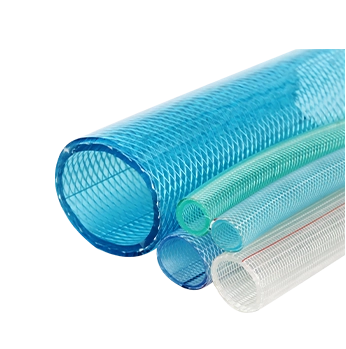
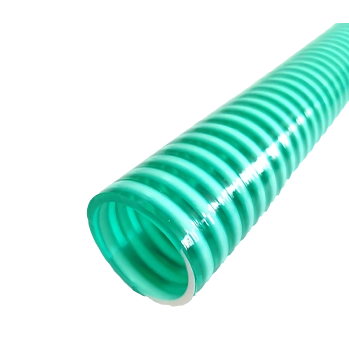
| Reinforcement | Wire spiral or textile braid | Prevents collapse & kinking |
Now, about customization — this really is where suppliers like Kebing Hose shine. Over my years, I noticed companies sometimes get stuck with “off-the-shelf” solutions that don’t quite fit. Who knew hoses could be made to order, with specialized diameters, lengths, reinforcement types, and even color-coding for safety compliance? It’s a small detail, but it can make a world of difference in workflow clarity and downtime reduction.
A quick anecdote: One client of mine in the pharmaceutical sector was struggling with contamination issues caused by tiny hose abrasions inside their vacuum transfer lines. We sourced a urethane-reinforced vacuum hose customized to their exact specs — smoother inner walls, resistant to chemical exposure, and easy to autoclave. The difference was night and day, dramatically cutting maintenance frequency and speeding up their batch cycles.
| Manufacturer | Material Options | Reinforcement | Customization | Lead Time |
|---|---|---|---|---|
| Kebing Hose | PVC, NBR, PU | Wire spiral, textile braid | Full range, color-coded options | 2-4 weeks |
| Competitor A | PVC only | Wire spiral | Limited custom diameters | 4-6 weeks |
| Competitor B | NBR, PU | Textile braid only | Standard sizes, no color coding | 3-5 weeks |
Of course, vacuum hoses are not one-size-fits-all. You’ll want to keep an eye on the working pressure ratings, chemical resistance, and temperature limits to match your system’s demands. Maintenance schedules also hinge on how abrasive your transported materials are and how frequently the hose is handled or moved.
Some plants even use color-coded vacuum hoses to quickly identify purpose — say, chemical suction vs. food-grade lines — which is a neat little operational trick I picked up and saw save both time and errors during hectic shifts.
In conclusion, if you seek durability, efficiency, and customization, selecting the right vacuum hose supplier is more than just ticking boxes. It’s an investment in smoother operations. With companies like Kebing Hose offering tailored products and reliable delivery, you get an edge that frankly, pays dividends.
Oddly enough, something as straightforward as a vacuum hose can tell you volumes about a company’s approach to quality.
Takeaway: Don’t underestimate the impact of choosing the right vacuum hose—your system performance and uptime depend on it.
References:
- Industrial Hose Association, Hose Selection Guidelines, 2023.
- Materials Engineering Handbook, Vacuum Hose Materials Chapter, 2022.
- Case Study: Pharmaceutical Transfer Lines, Kebing Hose Client Records, 2021.
-
High Strength Industrial Clear Braided PVC Hose Pipe GuideNewsApr.16,2026
-
Industrial Reinforced Braided PVC Hose for Fluid Transfer GuideNewsApr.09,2026
-
Comprehensive Guide to Braided PVC Tubing Applications and BenefitsNewsApr.07,2026
-
Comprehensive Guide to Braided Clear Vinyl Tubing Applications and BenefitsNewsApr.04,2026
-
Comprehensive Guide to PVC Braided Hose Applications and SelectionNewsMar.31,2026
-
Comprehensive Guide to Selecting the Best Double Welding Hose for Your NeedsNewsMar.28,2026
 Afrikaans
 Albanian
 Arabic
 Azerbaijani
 Belarusian
 Bengali
 Bulgarian
 Czech
Czech
 Danish
 Dutch
Dutch
 Finnish
 French
 German
 Greek
Greek
 Hebrew
 Hindi
Hindi
 Hungarian
 Indonesian
 Irish
Irish
 Italian
 Japanese
 Kazakh
 Korean
 Kyrgyz
 Lao
Lao
 Latin
Latin
 Lithuanian
 Luxembourgish
 Malay
Malay
 Mongolian
 Myanmar
 Nepali
 Norwegian
 Persian
 Polish
 Portuguese
 Russian
 Serbian
 Slovak
 Spanish
 Swedish
 Tagalog
 Thai
Thai
 Turkish
 Ukrainian
 Uighur
 Uzbek
Uzbek
 Vietnamese
 Welsh
Welsh
 English