


Durable PVC Corrugated Suction Hose for Industrial Use
What Makes PVC Corrugated Suction Hose a Go-To in Industry?
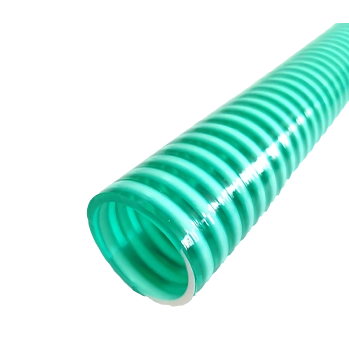
Having spent more than a decade in the industrial equipment scene, I can say that sometimes it’s those unsung, workhorse components that really win the day. Take the humble PVC corrugated suction hose—yeah, that flexible, ribbed tube that looks deceptively simple yet performs so many vital suction tasks across factories and construction sites.
The corrugation—those rib-like rings running around the hose—are not just for show. They lend the hose the ability to flex and bend around tight corners without collapsing, which frankly is a requirement you notice only after putting the hose through its paces. I remember a project where the hose had to snake its way through cramped machinery and still handle constant negative pressure without buckling. It did just that, day in, day out.
Design and Materials Behind the Scenes
So, what’s under the hood? Industrial-grade PVC—a blend engineered for toughness, chemical resistance, and UV shielding—forms the core. It’s lightweight yet surprisingly rugged. The corrugated design creates a sort of structural integrity without turning the hose into a heavy, stiff nuisance.
Additionally, the inner surface is smooth enough to reduce abrasion on sucked materials, extending longevity, but the outer corrugations provide impact resistance. That balance is quite the engineering feat. Many engineers I’ve talked with appreciate this mix, especially when handling slurry, chemical liquids, or dry bulk materials. The hose is often reinforced internally with polyester or nylon braid to boost pressure ratings, making it versatile for more than just suction.
PVC Corrugated Suction Hose Specs: What to Watch For
| Specification | Typical Value | Notes |
|---|---|---|
| Material | PVC with Polyester Reinforcement | Chemical & weather resistant |
| Inner Diameter | 25mm - 300mm | Custom sizes often available |
| Temperature Range | -10°C to 65°C | Varies by grade |
| Pressure Rating | Vacuum up to -0.09MPa | Suitable for suction systems |
| Weight | Varies, ~0.3 - 1.2 kg/m | Depends on diameter and reinforcement |
Choosing the Right Supplier: A Quick Comparison
Now, I won’t pretend every PVC corrugated suction hose out there is created equal. When selecting suppliers, consistency, lead time, and compliance with industrial standards (ISO, SGS) come up a lot, especially from companies I have worked with. Here’s a quick vendor comparison I’ve put together based on real-world feedback:
| Supplier | Product Range | Customization | Delivery Speed | Price Level |
|---|---|---|---|---|
| KEBING Hose | Wide (25mm-300mm) | High (custom sizes, colors) | Fast (stock & made-to-order) | Competitive |
| Supplier B | Limited (50mm-150mm) | Medium (some options) | Moderate | Lower |
| Supplier C | Average (30mm-200mm) | Low (standard products only) | Slow | Higher |
Real-World Insights: Why It Matters
It’s one thing to read specs, another to witness a hose perform daily under harsh conditions. I recall a municipal wastewater treatment plant where the suction hose was subjected to abrasive, chemically harsh slurry for months. The longevity of that PVC corrugated suction hose was impressive—far outperforming some rubber alternatives. And the flexibility was crucial to fit their irregular piping layout.
More than once, a hose failure in tricky environments means operational downtime and costly repairs. That’s why many companies, my past employers included, break out a little grin when they find a supplier that can deliver consistent, durable results — like KEBING Hose does.
Anyway, if you find yourself specifying hoses for suction in industrial settings, pay close attention to quality and test certifications. The cheapest option rarely ends up saving you money (trust me on that one). And if flexibility and chemical resistance top your priority list, this PVC corrugated type is definitely worth a spot on your shortlist.
That it manages to be lightweight and strong, all while being relatively inexpensive, is a bonus. Kind of like that reliable old truck you keep coming back to...
References & Further Reading
- KEBING Hose Product Catalog - https://www.kebinghose.com
- Industrial Hose Standards and Testing - ISO & SGS Guidelines
- Field Case Studies on Suction Hose Durability - Industry Reports 2022
-
High Strength Industrial Clear Braided PVC Hose Pipe GuideNewsApr.16,2026
-
Industrial Reinforced Braided PVC Hose for Fluid Transfer GuideNewsApr.09,2026
-
Comprehensive Guide to Braided PVC Tubing Applications and BenefitsNewsApr.07,2026
-
Comprehensive Guide to Braided Clear Vinyl Tubing Applications and BenefitsNewsApr.04,2026
-
Comprehensive Guide to PVC Braided Hose Applications and SelectionNewsMar.31,2026
-
Comprehensive Guide to Selecting the Best Double Welding Hose for Your NeedsNewsMar.28,2026
 Afrikaans
 Albanian
 Arabic
 Azerbaijani
 Belarusian
 Bengali
 Bulgarian
 Czech
Czech
 Danish
 Dutch
Dutch
 Finnish
 French
 German
 Greek
Greek
 Hebrew
 Hindi
Hindi
 Hungarian
 Indonesian
 Irish
Irish
 Italian
 Japanese
 Kazakh
 Korean
 Kyrgyz
 Lao
Lao
 Latin
Latin
 Lithuanian
 Luxembourgish
 Malay
Malay
 Mongolian
 Myanmar
 Nepali
 Norwegian
 Persian
 Polish
 Portuguese
 Russian
 Serbian
 Slovak
 Spanish
 Swedish
 Tagalog
 Thai
Thai
 Turkish
 Ukrainian
 Uighur
 Uzbek
Uzbek
 Vietnamese
 Welsh
Welsh
 English