


Durable HVAC Aluminum Ducts: Expert Insights for Industrial Ventilation
Why HVAC aluminum duct remains a top choice in industrial ventilation
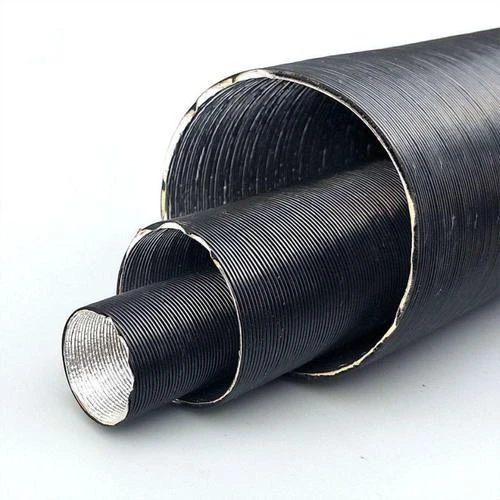
Having spent quite a few years in the industrial equipment sector, I’ve come to appreciate certain materials and products that just consistently deliver in real-world applications. One of those, oddly enough, is HVAC aluminum duct. You might think that all ducts are just ducts—just tubes carrying air—but when you’re involved in designing, installing, or maintaining industrial HVAC systems, the difference in materials can make or break the job.
Aluminum ducts particularly stand out for their excellent balance of durability, weight, and corrosion resistance. Frankly, the way aluminum performs in harsh industrial environments — including places prone to moisture or chemical exposure — is something I’ve always admired. While steel ducts have their place, aluminum ducts are easier to handle and often provide a longer-lasting solution without the risk of rust eating into the system.
In terms of design, the duct’s structural integrity is bolstered by the lightweight nature of aluminum, making installation less strenuous on workers and reducing labor time. Plus, aluminum's conductivity means it dissipates heat well — especially useful in systems handling hotter airflows or temperature-sensitive environments. I once worked on a retrofit project where switching to aluminum ducts noticeably cut down the system’s energy losses. It’s those kinds of details that can add up to serious cost savings over time.
| Property | Specification |
|---|---|
| Material | Aluminum Alloy 3003 or 5052 |
| Thickness | 0.5 - 1.0 mm (custom options available) |
| Surface finish | Mill finish or anodized |
| Common Dimensions | Rectangular and round profiles, various sizes |
| Corrosion resistance | Excellent for moist and mildly chemical environments |
| Weight | About one-third that of steel ducts of similar size |
Now, comparing vendors is crucial, especially since you want a supplier who understands the nuances of industrial HVAC needs. I’ve dealt with several manufacturers over the years, and here’s a quick rundown of what you might expect from three common sources:
| Feature | Vendor A | Vendor B | Vendor C |
|---|---|---|---|
| Material Grade | 3003 & 5052 | 5052 Aluminum Only | Custom Alloys Available |
| Custom Sizes | Yes | Limited | Yes, highly flexible |
| Minimum Order Quantity | 500 meters | 1000 meters | 250 meters |
| Certifications | ISO 9001, UL | ISO 14001 | ISO 9001, LEED Compliant |
| Lead Time | 2-3 weeks | 1 month+ | 1-2 weeks |
As someone who’s ordered ducts in less-than-ideal timelines, lead time and MOQ are real deal breakers. Oddly enough, some manufacturers underestimate how important fast shipping and flexibility are — especially when a project hits a snag and you need to adapt quickly.
Another nice thing about aluminum ducts is how customizable they are. I recall one job where the engineers specified a unique rectangular profile with reinforced edges — something not every supplier could handle. This sort of requirement is why you want an experienced partner who can go beyond "off-the-shelf" products, rather than just a catalog order.
In all honesty, HVAC aluminum duct lines from seasoned manufacturers impress with their consistent quality and material integrity. For any large-scale industrial environment looking to balance durability, ease of installation, and corrosion resistance, aluminum remains one of the smarter investments.
To put it simply? I’ve seen many engineers and site managers nod approvingly when it comes to aluminum ducts. They know the score — lightweight, reliable, and built to last.
And if you’re browsing product pages on this topic, you might already guess that not all suppliers are equal. So take your time, look for verified certifications, inquire about customization, and check lead times closely. Your HVAC system – and your sanity – will thank you.
In summary: aluminum HVAC ducts combine practicality and performance in a way that still holds up strong after years on the factory floor.
References:
1. “Aluminum Ducts for Industrial HVAC Systems,” Journal of Industrial Ventilation, 2022.
2. Manufacturer product sheets and ASTM material standards.
3. Personal experience across multiple HVAC installation projects, 2015–2023.
-
High Strength Industrial Clear Braided PVC Hose Pipe GuideNewsApr.16,2026
-
Industrial Reinforced Braided PVC Hose for Fluid Transfer GuideNewsApr.09,2026
-
Comprehensive Guide to Braided PVC Tubing Applications and BenefitsNewsApr.07,2026
-
Comprehensive Guide to Braided Clear Vinyl Tubing Applications and BenefitsNewsApr.04,2026
-
Comprehensive Guide to PVC Braided Hose Applications and SelectionNewsMar.31,2026
-
Comprehensive Guide to Selecting the Best Double Welding Hose for Your NeedsNewsMar.28,2026
 Afrikaans
 Albanian
 Arabic
 Azerbaijani
 Belarusian
 Bengali
 Bulgarian
 Czech
Czech
 Danish
 Dutch
Dutch
 Finnish
 French
 German
 Greek
Greek
 Hebrew
 Hindi
Hindi
 Hungarian
 Indonesian
 Irish
Irish
 Italian
 Japanese
 Kazakh
 Korean
 Kyrgyz
 Lao
Lao
 Latin
Latin
 Lithuanian
 Luxembourgish
 Malay
Malay
 Mongolian
 Myanmar
 Nepali
 Norwegian
 Persian
 Polish
 Portuguese
 Russian
 Serbian
 Slovak
 Spanish
 Swedish
 Tagalog
 Thai
Thai
 Turkish
 Ukrainian
 Uighur
 Uzbek
Uzbek
 Vietnamese
 Welsh
Welsh
 English