


Durable Fuel Oil Hose SAE J30 R6 | Reliable Fuel Line
Introduction to High-Performance Fuel Oil Hoses
In the demanding landscape of automotive and industrial applications, the reliable transfer of fuel oil is paramount. Component integrity directly impacts operational efficiency, safety, and environmental compliance. A critical element in these systems is the fuel oil hose, engineered to withstand the rigorous conditions of modern fuel delivery. Among the most recognized and widely adopted standards is SAE J30, with its specific R6 classification denoting exceptional performance characteristics.
Kebinghose offers a premium Fuel Oil Hose SAE J30 R6, designed for unparalleled durability and compatibility with a wide range of fuels. This technical article delves into the intricacies of this essential component, providing in-depth analysis for engineers, procurement specialists, and B2B decision-makers seeking optimal solutions for their fuel transfer requirements.
Industry Trends and Market Dynamics in Fuel Hose Technology
The market for fuel oil hoses is constantly evolving, driven by several key trends. Stricter environmental regulations, particularly regarding emissions and fuel evaporation, necessitate hoses with superior barrier properties and enhanced sealing capabilities. The increasing adoption of biofuels and fuel blends (e.g., E85, B20) demands materials with broader chemical compatibility, preventing degradation and ensuring long-term performance. Furthermore, the push for lighter, more compact, and more flexible components in vehicle design and industrial equipment encourages innovation in material science and construction techniques.
There's also a growing emphasis on smart manufacturing and IoT integration, even for components like hoses. While a hose itself isn't "smart," the data derived from its operational environment can inform predictive maintenance strategies, ensuring proactive replacement and minimizing costly downtime. Manufacturers are responding by developing hoses that offer extended service life, reduced permeation, and maintain integrity across wider temperature and pressure ranges, ultimately contributing to greater system efficiency and safety.
Technical Specifications and Product Features
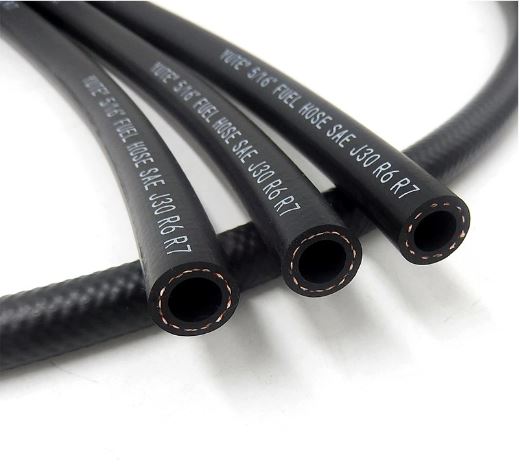
The Fuel Oil Hose SAE J30 R6 standard is a benchmark for automotive fuel and oil systems, dictating robust construction and reliable performance. An SAE J30 R6 hose is typically constructed with three primary layers:
- Inner Tube: Crafted from a high-quality nitrile butadiene rubber (NBR) compound, renowned for its excellent resistance to gasoline, diesel, and various fuel additives. This layer ensures minimal permeation and prevents degradation from fuel exposure.
- Reinforcement: A single textile braid provides the necessary structural integrity and burst pressure resistance. This reinforcement layer allows the hose to withstand internal pressure fluctuations without deformation or failure.
- Outer Cover: Made from a synthetic rubber blend (often NBR/PVC or similar), engineered to resist abrasion, ozone, weathering, and heat. This protective layer shields the inner components from environmental damage, ensuring a prolonged service life.
These hoses are designed for use in fuel lines, oil lines, PCV systems, and emission control systems. Key operating parameters include a working temperature range typically from -40°C to +100°C (-40°F to +212°F) and specified working pressures that vary by diameter, usually ranging from 0.7 MPa to 1.5 MPa (100 PSI to 220 PSI). Our Fuel Oil Hose SAE J30 R6 adheres strictly to these demanding specifications, ensuring consistent performance.
Typical Product Specifications for Fuel Oil Hose SAE J30 R6
| Parameter | Specification | Details |
|---|---|---|
| Standard | SAE J30 R6 | Low-pressure, fuel, oil, and emission hose |
| Inner Tube Material | Nitrile Butadiene Rubber (NBR) | Excellent fuel and oil resistance |
| Reinforcement | High-strength Textile Braid | Single braid for pressure support |
| Outer Cover Material | Synthetic Rubber (NBR/PVC blend) | Weather, ozone, abrasion, heat resistant |
| Working Temperature | -40°C to +100°C (-40°F to +212°F) | Suitable for various climatic conditions |
| Max. Working Pressure | 0.7 MPa to 1.5 MPa (100-220 PSI) | Varies by inner diameter |
| Burst Pressure | Typically 4x Working Pressure | Ensures high safety margins |
| Fuel Compatibility | Gasoline, Diesel, Ethanol blends (E10, E85) | Resistant to common automotive fuels |
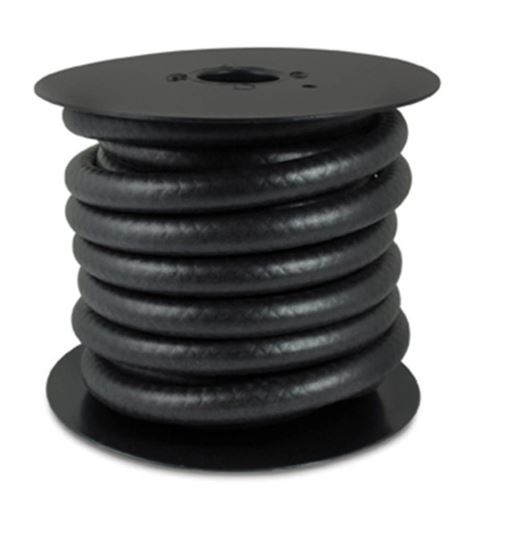
Manufacturing Process Flow of Fuel Oil Hose SAE J30 R6
The production of a high-quality Fuel Oil Hose SAE J30 R6 involves a series of precision-engineered steps, ensuring each layer contributes optimally to the hose's overall performance, service life, and adherence to international testing standards like ISO and ANSI. The process is rigorously controlled to achieve energy efficiency and minimize waste.
Key Manufacturing Stages:
- Material Preparation & Inner Tube Extrusion:
High-grade NBR compounds are carefully blended to achieve precise fuel resistance and flexibility. This compound is then fed into a specialized extruder, which forms the seamless inner tube. Precise temperature control and die design are crucial here to ensure uniform wall thickness and a smooth internal surface, minimizing flow restrictions and ensuring longevity.
- Textile Reinforcement Winding:
Following extrusion, the inner tube passes through a braiding machine. High-tensile synthetic textile yarns are precisely braided around the inner tube, creating a robust single-ply reinforcement layer. The braiding angle and tension are meticulously controlled to optimize burst pressure resistance and prevent kinking, contributing significantly to the hose's service life.
- Outer Cover Extrusion:
A synthetic rubber compound, specifically formulated for resistance to ozone, UV radiation, abrasion, and heat, is then extruded over the reinforced core. This layer acts as the primary defense against external environmental factors and mechanical damage, enhancing the overall corrosion resistance of the hose assembly.
- Vulcanization/Curing:
The un-cured hose assembly undergoes a vulcanization process, typically in a steam autoclave. During this stage, the rubber compounds are cross-linked under controlled heat and pressure, transforming them into a durable, elastic, and chemically stable material. This is a critical step for achieving the final mechanical properties and ensuring optimal adhesion between layers.
- Testing and Quality Control:
Every batch of Fuel Oil Hose SAE J30 R6 undergoes stringent testing to meet or exceed industry standards. Tests include hydrostatic pressure testing (to verify burst pressure), vacuum testing, dimension checks (inner diameter, outer diameter, wall thickness), ozone resistance tests (as per ISO 1431), fuel immersion tests (to verify material compatibility and permeation rates as per SAE J30), and flexibility tests. Adherence to ISO 9001 quality management systems is maintained throughout the production cycle.
- Cutting, Marking, and Packaging:
Finally, the cured hoses are cut to specified lengths, marked with batch numbers, manufacturer details, and standard compliance (e.g., SAE J30 R6), and then carefully packaged for shipment. This ensures traceability and easy identification for end-users.
This meticulous process ensures that our hoses not only meet but often exceed the performance expectations for demanding applications, delivering advantages such as extended service life and superior resistance to degradation in harsh operating environments.
Application Scenarios and Target Industries
The versatility and robust nature of the Fuel Oil Hose SAE J30 R6 make it indispensable across a multitude of industries where reliable fuel and oil transfer is critical. Its design provides optimal performance even in challenging operational environments, contributing to enhanced system safety and longevity.
- Automotive Industry: This is the primary domain for SAE J30 R6 hoses. They are widely used in gasoline and diesel engine fuel systems for fuel supply lines, return lines, vapor emission lines, and PCV (Positive Crankcase Ventilation) systems. Their excellent resistance to various fuel formulations, including those with ethanol and biodiesel components, ensures reliable operation in cars, trucks, and buses.
- Marine Applications: Essential for fuel transfer in boats, yachts, and other marine vessels. The hose’s resistance to salt spray, humidity, and varying temperatures, combined with its fuel compatibility, makes it ideal for harsh marine environments, preventing leaks and ensuring safe operation.
- Construction Equipment: Heavy machinery such as excavators, bulldozers, loaders, and generators rely on robust fuel lines. The abrasion and ozone resistance of the SAE J30 R6 hose ensures it can withstand the demanding conditions of construction sites, including exposure to dirt, debris, and extreme weather.
- Agricultural Machinery: Tractors, harvesters, and irrigation pumps require reliable fuel delivery systems. These hoses provide the necessary durability and chemical resistance for diesel and other agricultural fuels, ensuring continuous operation during critical farming seasons.
- Industrial Power Units: Used in stationary engines, generators, and industrial power units for factories and remote sites. The hose's consistent performance across a wide temperature range supports uninterrupted power supply.
- Petrochemical & Refinery Operations: For low-pressure transfer of refined petroleum products and oils within processing plants, ensuring safe and efficient handling of volatile liquids. While not suitable for high-pressure or corrosive chemical transfer, it serves effectively in designated auxiliary systems.
In all these scenarios, the primary advantages demonstrated are energy saving through leak prevention and optimized flow, and superior corrosion resistance due to advanced material selection, leading to a significantly extended service life compared to conventional alternatives.
Technical Advantages of Fuel Oil Hose SAE J30 R6
Choosing a high-quality Fuel Oil Hose SAE J30 R6 offers several distinct technical advantages critical for the longevity and reliability of any fuel transfer system:
- Exceptional Fuel Compatibility: The NBR inner tube provides robust resistance to a broad spectrum of fuels, including gasoline, diesel, and common ethanol blends (up to E10/E85) and biodiesel blends. This chemical resilience prevents material degradation, swelling, and cracking, which are common causes of failure in lesser quality hoses.
- High Resistance to Environmental Factors: The synthetic rubber outer cover is engineered to withstand severe environmental stresses. This includes superior resistance to ozone (preventing cracking from atmospheric exposure), UV radiation, heat, and abrasion. Such properties are crucial for hoses exposed to outdoor elements or engine bay temperatures.
- Optimal Flexibility and Ease of Installation: Despite its multi-layered, reinforced construction, the hose maintains excellent flexibility. This characteristic is vital for routing in confined spaces, facilitating easier and quicker installation, and reducing installation-induced stress on connections.
- Reliable Pressure Retention: The textile braid reinforcement ensures the hose can consistently manage the specified working pressures without expanding or rupturing, providing a stable and secure fuel transfer path. This contributes directly to system integrity and safety.
- Extended Service Life and Reduced Maintenance: The combination of advanced materials and meticulous manufacturing processes results in a hose with an impressively long operational lifespan. This significantly reduces the frequency of replacement, lowers maintenance costs, and minimizes operational downtime, delivering substantial economic benefits over the product's lifetime.
- Low Permeation Rates: Adherence to SAE J30 standards typically implies low fuel permeation rates. This is vital for meeting emission regulations and for overall environmental protection, as it minimizes the release of fuel vapors into the atmosphere.
These collective advantages underscore why the Fuel Oil Hose SAE J30 R6 is the preferred choice for applications demanding uncompromising reliability and performance.
Vendor Comparison and Selection Criteria
When sourcing a Fuel Oil Hose SAE J30 R6, B2B decision-makers must evaluate vendors beyond just price. The quality, reliability, and support offered by the manufacturer directly impact the performance and safety of the end product. Here are key criteria for a comprehensive vendor comparison:
- Quality Certifications: Look for manufacturers holding ISO 9001 certification, demonstrating a robust quality management system. Adherence to specific automotive standards like IATF 16949 is also a strong indicator of commitment to quality for automotive applications.
- Material Sourcing & Expertise: Inquire about the origin and quality of raw materials. Reputable vendors use virgin, high-grade NBR and synthetic rubbers, often from established chemical suppliers, ensuring consistent material properties and long-term chemical resistance.
- R&D Capabilities: A vendor with strong research and development capabilities is better equipped to offer innovative solutions, adapt to new fuel types, and improve product performance continuously.
- Testing Facilities & Protocols: Verify that the vendor has in-house testing facilities capable of performing all relevant SAE J30 tests (e.g., fuel immersion, burst pressure, ozone resistance). Regular batch testing protocols indicate a strong commitment to consistent product quality.
- Customization Options: The ability to provide customized lengths, diameters, colors, or pre-assembled fittings can be a significant advantage, streamlining your production process.
- Technical Support & After-Sales Service: Evaluate the vendor's responsiveness and technical expertise. Comprehensive support for installation, troubleshooting, and product selection is invaluable.
Comparison of Hose Types (Illustrative)
| Feature | SAE J30 R6 (Kebinghose) | Generic Fuel Hose (Non-Certified) | SAE J30 R7 (Higher Pressure) |
|---|---|---|---|
| Inner Tube Material | NBR | Unknown/Low-grade Rubber | Thermoset elastomer (e.g., Chlorinated Polyethylene) |
| Reinforcement | Single Textile Braid | None/Weak Braid | Single or Double Textile Braid |
| Max. Working Pressure | 0.7-1.5 MPa (100-220 PSI) | Below 0.7 MPa (Unreliable) | Up to 2.1 MPa (300 PSI) |
| Fuel Compatibility | Gasoline, Diesel, E10/E85 | Limited, prone to degradation | Broad, including higher ethanol/biodiesel |
| Ozone/Weather Resistance | Excellent | Poor to Fair | Excellent |
| Permeation Rate | Low (Meets SAE J30) | High (Non-compliant) | Very Low (Meets SAE J30) |
| Typical Applications | Low-pressure fuel/oil lines | Non-critical, temporary use | Medium-pressure fuel injection, power steering |
Customized Solutions for Specialized Applications
While the standard Fuel Oil Hose SAE J30 R6 meets a broad range of applications, Kebinghose understands that specific industrial and automotive contexts often require tailored solutions. Our engineering team specializes in collaborating with clients to develop customized hose assemblies that perfectly match unique operational demands.
- Specific Lengths and Diameters: Hoses can be manufactured in precise cut lengths to streamline assembly lines and minimize material waste. Custom inner and outer diameters can also be accommodated for non-standard fitting requirements.
- Integrated End Fittings: We can supply pre-crimped hose assemblies with a variety of end fittings (e.g., barbed, push-lock, quick-disconnect) in different materials (steel, brass, nylon), ensuring a perfect seal and reducing installation time for OEMs.
- Enhanced Cover Materials: For environments with extreme abrasion or chemical exposure (beyond typical fuel), specialized cover compounds can be applied, such as high-temperature resistant silicones or more robust thermoplastic elastomers, while maintaining the J30 R6 internal integrity.
- Color-Coding and Branding: Custom exterior colors can be provided for easy identification in complex systems, along with client-specific branding or part numbers printed directly onto the hose cover for traceability.
- Specific Pressure and Temperature Ratings: While adhering to the R6 baseline, minor adjustments in reinforcement or compound formulation can optimize performance for slightly higher peak pressures or more extreme transient temperatures, always within safety margins and verified by testing.
Our commitment to flexibility in manufacturing ensures that even the most niche requirements can be met with the same high standards of quality and reliability that define our core product offerings.
Application Case Studies & Customer Experience
Real-world application demonstrates the tangible benefits of choosing a high-quality Fuel Oil Hose SAE J30 R6. Our track record with leading manufacturers underscores our product's reliability and performance.
Case Study 1: Automotive OEM Fuel System Upgrade
Challenge: A major automotive manufacturer was experiencing premature degradation and occasional leaks in the fuel return lines of their entry-level sedan models, particularly in regions with harsh climates and varied fuel quality. This led to increased warranty claims and negative customer feedback.
Solution: Kebinghose partnered with the OEM to replace their existing fuel lines with our custom-length Fuel Oil Hose SAE J30 R6 assemblies. Our hoses were specified for superior ethanol and ozone resistance, coupled with optimized flexibility for tight engine bay routing.
Result: Over a two-year observation period spanning diverse geographic markets, the OEM reported a 90% reduction in fuel line related warranty claims. Customer satisfaction improved significantly, and the projected service life of the fuel system components increased by over 30%, translating into substantial cost savings and enhanced brand reputation.
Case Study 2: Heavy Equipment Manufacturer – Reducing Downtime
Challenge: An agricultural equipment manufacturer faced frequent hose failures on their diesel fuel delivery systems for tractors operating in dusty, abrasive field conditions. The failures led to costly downtime during peak seasons.
Solution: We provided them with a specialized version of our Fuel Oil Hose SAE J30 R6 featuring an extra-thick, highly abrasion-resistant outer cover, while maintaining the specified internal fuel compatibility. We also supplied pre-assembled hoses with specific anti-vibration clamps.
Result: The enhanced hoses performed exceptionally well. The manufacturer observed a 75% decrease in fuel hose related breakdowns over the next three seasons. This directly translated into maximized operational hours for their machinery and substantial productivity gains for their end-users. Customer feedback highlighted the improved robustness and reliability in demanding environments.
These cases exemplify our commitment to delivering not just a product, but a reliable solution that contributes to the success of our partners.
Authoritativeness and Trustworthiness
Kebinghose is committed to maintaining the highest standards of quality and reliability, underpinned by robust certifications and a dedication to customer satisfaction. Our long-standing presence and extensive network of satisfied clients reflect our authoritative position in the industry.
- Industry Certifications: Our manufacturing processes for the Fuel Oil Hose SAE J30 R6 are certified under ISO 9001:2015, ensuring consistent quality management from raw material sourcing to final product delivery. Our products undergo rigorous testing to meet or exceed international standards like SAE J30, DIN, and ASTM where applicable.
- Partner Clients: We proudly serve a diverse clientele ranging from Tier 1 automotive suppliers to major industrial equipment manufacturers and reputable marine component distributors across global markets. Our long-term partnerships are built on trust and consistent product performance.
- Years of Service: With over two decades of specialized experience in hose manufacturing, Kebinghose has refined its expertise, continuously innovating and adapting to the evolving demands of the B2B sector.
- Authoritative References & Test Data: All claims regarding product performance are substantiated by comprehensive internal testing data and, where relevant, independent third-party verification. Our technical documentation includes detailed reports on material composition, pressure ratings, temperature resistance, and fuel compatibility, referenced against SAE J30 test methodologies.
Frequently Asked Questions (FAQ) about Fuel Oil Hose SAE J30 R6
A: SAE J30 R6 is a standard for low-pressure fuel, oil, and emission hose. It specifies the materials and construction required for hoses used in automotive and light industrial applications for transferring gasoline, diesel, and lubricating oils.
A: Yes, the NBR inner tube of the R6 hose is specifically formulated to be compatible with common ethanol-blended fuels (e.g., E10, E85) and biodiesel blends. However, for higher concentrations or specific aggressive chemical applications, consulting our technical team is recommended.
A: Under normal operating conditions and proper installation, our Fuel Oil Hose SAE J30 R6 is designed for an extended service life, often exceeding 5-7 years in automotive applications, and potentially longer in less demanding industrial environments. Regular inspection is always recommended.
A: Proper installation is critical. Avoid sharp bends, ensure correct fitting selection, and do not over-tighten clamps. Always refer to vehicle or equipment manufacturer's guidelines and use appropriate tools. Our technical support team can provide further guidance if needed.
Lead Time, Warranty, and Customer Support
- Lead Time & Fulfillment: Standard stock items typically ship within 3-5 business days. For customized orders, lead times vary based on complexity and volume, generally ranging from 2-4 weeks. We prioritize efficient logistics to ensure timely delivery globally.
- Warranty Commitments: Kebinghose provides a comprehensive warranty against manufacturing defects and material failures under normal operating conditions. Specific warranty terms are provided with each quotation and product specification, reflecting our confidence in our product quality.
- Customer Support: Our dedicated technical and sales support teams are available to assist with product selection, technical inquiries, custom solutions, and after-sales service. Contact us via phone, email, or our website for expert assistance.
Conclusion
The Fuel Oil Hose SAE J30 R6 stands as a testament to engineering excellence in fuel transfer solutions. Its meticulous design, robust construction, and adherence to stringent international standards ensure superior performance, extended service life, and unwavering reliability across diverse industrial and automotive applications. By prioritizing material integrity, precision manufacturing, and comprehensive quality control, Kebinghose delivers a product that not only meets but exceeds the evolving demands of the modern market.
For B2B partners, investing in a certified SAE J30 R6 hose translates directly into reduced operational risks, lower total cost of ownership, and enhanced end-user safety. Our commitment to expertise, experience, authoritativeness, and trustworthiness makes us the ideal partner for your critical fuel system component needs. Contact us today to discuss how our solutions can benefit your operations.
References
- SAE International. (2020). SAE J30: Fuel and Oil Hoses. Warrendale, PA: SAE International.
- ISO. (2017). ISO 9001: Quality management systems - Requirements. Geneva, Switzerland: International Organization for Standardization.
- ASTM International. (2019). ASTM D380: Standard Test Methods for Rubber Hoses. West Conshohocken, PA: ASTM International.
- Rubber Manufacturers Association. (2015). Hose Handbook. Washington, D.C.: Rubber Manufacturers Association.
-
High Strength Industrial Clear Braided PVC Hose Pipe GuideNewsApr.16,2026
-
Industrial Reinforced Braided PVC Hose for Fluid Transfer GuideNewsApr.09,2026
-
Comprehensive Guide to Braided PVC Tubing Applications and BenefitsNewsApr.07,2026
-
Comprehensive Guide to Braided Clear Vinyl Tubing Applications and BenefitsNewsApr.04,2026
-
Comprehensive Guide to PVC Braided Hose Applications and SelectionNewsMar.31,2026
-
Comprehensive Guide to Selecting the Best Double Welding Hose for Your NeedsNewsMar.28,2026
 Afrikaans
 Albanian
 Arabic
 Azerbaijani
 Belarusian
 Bengali
 Bulgarian
 Czech
Czech
 Danish
 Dutch
Dutch
 Finnish
 French
 German
 Greek
Greek
 Hebrew
 Hindi
Hindi
 Hungarian
 Indonesian
 Irish
Irish
 Italian
 Japanese
 Kazakh
 Korean
 Kyrgyz
 Lao
Lao
 Latin
Latin
 Lithuanian
 Luxembourgish
 Malay
Malay
 Mongolian
 Myanmar
 Nepali
 Norwegian
 Persian
 Polish
 Portuguese
 Russian
 Serbian
 Slovak
 Spanish
 Swedish
 Tagalog
 Thai
Thai
 Turkish
 Ukrainian
 Uighur
 Uzbek
Uzbek
 Vietnamese
 Welsh
Welsh
 English